
Struggling to keep your aquarium warm without a heater? It’s possible to maintain a healthy temperature with some simple tricks.
By insulating the tank, placing it in a cozy spot, and using warm water bottles, you can help keep the water stable.
Keep reading to learn effective ways to heat your aquarium safely and naturally.
Why Might You Need Alternative Ways to Heat Your Aquarium?
When your main aquarium heater isn’t functioning properly or cannot meet the temperature requirements, you need alternative heating methods to keep your fish safe. Rapid drops in water temperature due to power outages, heater failure, or seasonal fluctuations can pose serious risks to your aquatic life. If your tank is placed in an unheated space like a garage or basement, cold drafts and proximity to exterior walls can accelerate heat loss, making supplementary heating essential. Decorations such as caves, plants, or rocks may interfere with heat distribution, causing uneven temperatures and complicating temperature stability. Watch for fish behaviors like increased breathing rates, hiding, or sluggishness, which can indicate temperature stress. Short-term warming solutions, like portable heaters or insulating wraps, can help maintain safe conditions until your main heater is repaired or replaced. These methods are especially critical for tropical species that require a consistent warm environment for health and well-being, especially when you understand the heat distribution challenges within your tank. Ensuring proper thermal management helps prevent temperature fluctuations that can stress or harm your aquatic inhabitants. Proper temperature monitoring tools, such as reliable thermometers, are essential for maintaining optimal conditions in your tank.
How to Place Your Aquarium for Better Warmth in Your Home
Placing your aquarium in a warm, consistent location is crucial for maintaining stable water temperatures. The ideal spot is an area that naturally benefits from room temperature—preferably on an upper floor of a multi-story home, as these tend to be a few degrees warmer than lower levels. Avoid spots like garages, basements, or sun porches where temperatures fluctuate significantly and are less predictable.
Choose a location away from drafts, windows, doors, vents, and poorly insulated walls. These areas can cause rapid cooling, making it harder for your aquarium to stay warm. Keep the tank away from ventilation outlets and high-traffic zones, since constant air movement and activity can impact temperature stability.
Positioning your aquarium near interior walls that retain heat can help maintain a steady environment. Overall, selecting a spot with consistent, moderate warmth reduces the need for extra heating and supports a healthy aquatic environment. Maintaining a stable environment is essential for the health of both aquatic life and terrestrial species like leopard geckos. Using a well-insulated location can further minimize temperature fluctuations and promote a consistent habitat. Additionally, understanding room temperature stability can guide you in choosing the best placement to prevent sudden temperature swings.
What Materials Work Best to Insulate Your Aquarium During Cold Weather
Foam boards and polystyrene sheets are the most effective materials for insulating your aquarium during cold weather. They are easy to cut to your tank’s dimensions and fit snugly against the glass, creating a solid barrier against heat loss. These foam-based insulations are cost-effective and work well in cold rooms or on exterior walls, slowing conductive heat transfer through direct contact. Reflective foil insulation and emergency blankets enhance heat retention by reflecting radiant heat back into the tank, making them good supplementary options. Bubble wrap, with its trapped air pockets, offers a simple and budget-friendly buffer on the sides and back of the tank, reducing heat loss through convection. Combining different materials, such as foam panels with reflective wraps, can provide superior insulation. Insulation techniques can significantly improve temperature stability and reduce energy costs. Additionally, paying attention to insulation materials can help maximize the efficiency of your setup during winter. Comparing their effectiveness will help you determine the best setup for keeping your aquarium warm during winter.

What You Will Receive: the package contains 4 pieces of XPS foam sheets, with a measurement of about 1 x1 feet, the thickness is about 2 cm/ 0.79 inch, suitable for DIY modeling art supplies

This Insulation Is Moisture Resistant XPS Insulation Foam Board. It Does Not Crumble Into Small Pieces Like Styrofoam. Size of 1sqft per panel is large enough for most craft and home projects.

(2ft wide x 5ft long) 3/8 inch thick (10MM) Reflective Side / White Vinyl Side Foam Core Insulation. Easy to Install & Shape & Bend. Lightweight & Non-Toxic. Foam Core Not Cheap Poly Bubble
How to Safely Use Warm Water Bottles and Temporary Heaters
Using warm water bottles or temporary heaters can be a safe and effective way to quickly increase the temperature of your aquarium during emergencies. Use a sealed plastic, rubber, or silicone bottle filled with warm water at around 100–120°F (38–49°C). Avoid boiling water to prevent damage or stress to your aquarium. Wrap the bottle in paper towels or cloth to make hot spots less intense and to insulate the glass contact, protecting your decorations and fish health.
Place the bottle against the tank wall or float it on the surface, ensuring it does not directly touch aquatic plants or fish. Check the temperature regularly with a reliable thermometer—every 15 to 30 minutes—to monitor progress. Add warmth gradually to prevent stressing your fish and avoid rapid temperature shifts. Once the target temperature is reached, remove the bottle to maintain a stable environment. Keep your filtration or circulation systems running to promote even heat distribution, but watch carefully to prevent overheating or sudden temperature changes that could harm your aquatic inhabitants. Maintaining a stable water parameter is essential for overall water quality and the health of your aquarium ecosystem. Properly monitoring temperature control is crucial to prevent any sudden fluctuations that may unsettle your aquatic life.
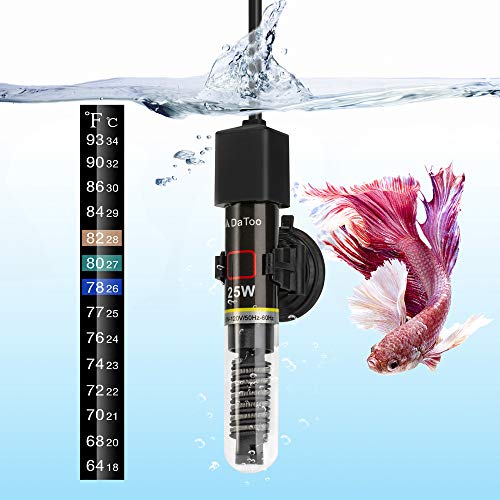
25W Betta Aquarium Heater: Creating and maintaining a perfect and comfortable water temperature for our cute fish is not easy, which requires a lot of effort. Now DaToo MINI 25W Aquarium Heater can help you make this easier. Precise and constant temperature, no need to set, keep the temperature of fish habitat in the best state at all times. You will find it very easy and happy to take care of pet fish!
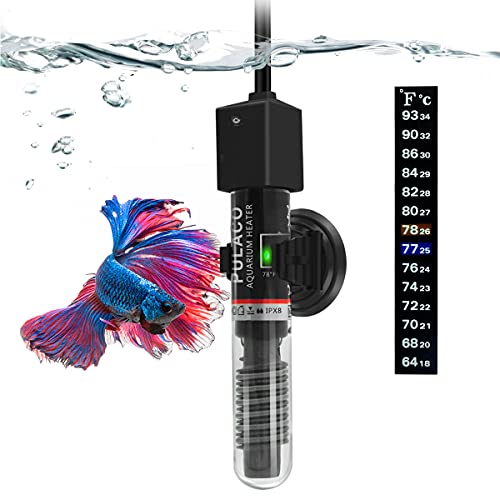
【Betta Heater】: This Fish Tank Heater should be 100% submerged into water, Ideal for small glass or acrylic desktop aquariums up 1 to 6 Gallons, not suitable for less than 1 gallon tank.

The 100W aquarium heater is recommended for 15 to 30 gallon fish tank; heater length: 8.25”; power cord: 6ft; voltage: 110V/60Hz
Can Aquarium Lights or DIY Devices Help Raise Water Temperature?
Aquarium lights can influence water temperature, but their effect on heating depends mainly on the type of lighting used. Incandescent and metal halide lights generate significant heat, sometimes raising water temperature by several degrees, which can be useful or problematic depending on your needs. Conversely, LED lights produce far less heat—usually only about 1 to 2 degrees Fahrenheit—making them better suited for maintaining stable water temperatures rather than heating. Additionally, understanding aquarium lighting types can help you choose the best option to manage water temperature effectively. Adjusting your lighting schedule, such as reducing the number of hours or wattage, can help limit heat buildup. Proper fixture placement with good airflow around the lights also minimizes temperature increases. DIY decorative lights, which are often not rated for submersion, are generally unsafe for use in aquariums and provide minimal, uncontrollable warming. They pose electrical hazards and do not reliably or safely raise water temperatures.

Elevate your coral reef's brilliance with our 250W 20,000K HQI Metal Halide Bulb, designed to mimic natural sunlight for optimal coral growth and vibrant colors.

MARINE COLOR BRAND 250w 20,000k HQI fc2 double Ended Metal Halide Bulbs

Provides bright 6500K daylight spectrum ideal for freshwater and marine aquariums.
How to Monitor Water Temperature and Change Water Without Shock
To monitor water temperature and change water without shocking your fish, start by placing a reliable thermometer in the middle of your tank, away from heaters, filters, decorations, and direct light. This placement provides an accurate reading of the overall tank temperature. Check the temperature at the same times each day, such as morning and evening, to observe any fluctuations. When performing water changes, match the new water temperature as closely as possible, within about ±5°F of the tank water. Gradually warm or cool the replacement water to avoid sudden temperature shifts that could stress your fish. Always change water in small, partial amounts, no more than 2°F per hour, to further reduce stress. Using appropriate testing methods helps ensure that water parameters remain within safe ranges and supports a stable environment. Regular water testing is essential to detect any fluctuations early and prevent potential problems. After adjustments, recheck the temperature to ensure it remains stable. Adequate water circulation helps distribute temperature evenly throughout the tank, minimizing hot spots or cold areas that might harm your aquatic life.
What Safety Tips Should You Follow When Heating Without a Heater?
To ensure safety when heating an aquarium without a heater, follow these safety tips carefully. Always use a reliable thermometer to monitor water temperature frequently—this helps prevent dangerous swings that could stress or harm your fish. Avoid methods that cause rapid temperature fluctuations, such as adding very hot water all at once, which can shock your aquatic life. Maintaining stable temperatures is crucial because sudden changes can be stressful or even fatal for fish. Keep the tank out of direct sunlight to prevent overheating and avoid unnecessary temperature spikes. When using warm water bottles, maintain them at 100–110°F; never boil water or introduce hot water suddenly. Monitoring temperature changes regularly is essential to detect and respond to any fluctuations promptly. Limiting the duration that auxiliary heat sources are applied helps maintain a steady environment and prevents sudden temperature shifts. Additionally, considering proper oxygen exchange by leaving small gaps in tank covers or lids ensures good gas exchange and helps fish breathe comfortably. An adequate aeration system can also be beneficial in maintaining water quality and oxygen levels during temperature regulation. Consider using an aeration device if surface movement decreases, which can also aid in oxygenating the water. Never use open flames, untested or flammable materials, or insecure containers, as these pose fire risks, potential contamination, or injury. Following these precautions helps keep your fish safe and the environment stable during improvisational heating efforts.
Troubleshooting Common Problems With Aquarium Heating in Emergencies
To troubleshoot heating issues during an emergency, start by verifying the temperature with a second thermometer, preferably a digital probe, to avoid false readings caused by faulty equipment. Check whether the aquarium water already matches the setpoint, as a stable temperature might make the heater appear off. Observe your fish’s behavior and the color of the water for signs of temperature stress, such as frantic movement or pale coloration. Ensure the heater is fully submerged, free of cracks, and positioned away from strong water flow areas that could affect heating performance. Faulty heaters often give inaccurate readings, so confirming with a reliable thermometer is essential for accurate assessment.
Next, test the power outlet by plugging in another device to confirm it functions properly. Inspect all electrical connections and cords for damage or corrosion. If the water temperature exceeds 85°F, unplug the heater immediately and gradually bring the temperature down using frozen water bottles to prevent sudden shifts that could harm your aquatic life. Avoid rapid cooling, as it can cause shock or stress to your fish. Additionally, ensuring proper water water parameters, like pH and water hardness, can support consistent heating and overall tank stability. Understanding different heating methods can also help in choosing reliable emergency solutions that suit your tank’s needs.

Wide Application: Ideal for use in water or high moisture environment like aquarium terrarium, or vivarium, suitable for different water types such as fresh water, tap water, salty water, marine water and etc.

HD LED Display: PAIZOO Aquarium Thermometer adopts LED screen to display temperature, LED can provide wide viewing angle and the color is saturated, it is easier to read the data no matter day or night. Green environmental protection and energy saving

Wide application: Ideal for use in water or high moisture environment like aquarium terrarium, or vivarium; suitable for different water types such as fresh water, tap water, salty water, marine water and etc.