
Struggling to keep calcium levels in your reef tank in check? If your calcium is too high, it can harm your corals and other unseen inhabitants. The good news is, lowering it safely is straightforward with some patience and proper techniques.
Here’s how you can gradually bring those levels down without stressing your tank’s balance.
Why Controlling Calcium Levels Matters in Your Reef Tank
Maintaining calcium levels between 400 and 450 ppm is crucial for your reef tank’s health. If calcium drops below this range, coral skeletons slow their growth, weakening the overall structure of your reef. On the other hand, if calcium exceeds 450 ppm, it can cause calcium carbonate precipitation, leading to cloudy water and imbalanced chemistry. Fluctuations outside the recommended range stress corals, increasing the risk of disease and reducing their ability to reproduce. Consistently monitoring and adjusting calcium levels helps promote stable, healthy coral growth and prevents long-term complications. Elevated calcium levels can also accelerate calcium and alkalinity consumption, which underscores the importance of regular testing and timely adjustments to maintain balance. Understanding the effects of calcium carbonate precipitation can help prevent sudden water quality changes that could harm your corals. Additionally, maintaining stable alkalinity levels is essential to support consistent calcium absorption and coral growth. Proper practices such as regular testing and adjusting additives are key to avoiding these issues and ensuring a thriving reef environment.
How to Recognize When Calcium Is Too High
Levels above 450 ppm indicate a potential problem, with readings of 500 ppm or higher signaling an urgent need for intervention. Consistently high calcium levels typically result from over-supplementation, use of high-calcium salt mixes, or rapid dosing adjustments. These elevated levels can cause white, crusty buildup on equipment and instability in water chemistry. If your calcium tests repeatedly show high results despite normal maintenance routines, it suggests your tank is receiving more calcium than your corals and algae are using. Recognizing these signs helps prevent further chemical imbalances and promotes a healthier environment. Monitoring water chemistry regularly is essential to catch these issues early, as proper water parameter levels are crucial for a stable aquarium. Understanding aquarium chemistry can help you fine-tune your supplementation and maintain balanced calcium levels.
Immediate Steps to Lower Elevated Calcium Levels
To lower elevated calcium levels rapidly, immediately cease calcium supplementation. This stops adding more calcium to the water, helping to prevent further overdose and stabilize your water chemistry. Continue dosing alkalinity as usual to keep ion balance intact, since it is less likely to cause rapid shifts. Over time, coral and calcifying organisms will reduce their calcium uptake once external sources are halted. Consistent testing is essential for tracking progress and ensuring levels stay within the target range. Make gradual adjustments, reducing calcium by no more than 10 to 20 parts per million (ppm) each day. This cautious approach prevents sudden ionic imbalances that can stress your reef community. Perform targeted water changes of about 25 percent weekly with saltwater that has lower-than-standard calcium levels. This helps flush out excess calcium and bring levels down more consistently. During this process, test calcium daily to ensure it is trending downward and remains within the ideal range. It is also essential to closely monitor alkalinity and magnesium levels throughout this process, as understanding the ionic balance makes it easier to maintain a stable environment. Ensuring proper water parameters helps prevent fluctuations that could impact coral health. Maintaining stable levels of these ions prevents new issues from arising and keeps your tank’s chemistry balanced as calcium decreases. Additionally, considering appropriate filtration can help manage water quality and support a stable chemistry as your calcium levels are adjusted.

BOOSTS CORAL GROWTH AND STRUCTURE Delivers essential ionic calcium to support rapid coral, clam, and reef invertebrate skeletal development and strength.

FORMULATED SPECIFICALLY FOR REEF AQUARIUMS: Contains essential ocean reef elements in concentrations greater than those found in natural sea water

MULTIPLE COMPONENTS – Reef Code B is a multi-component automatic buffer that regulates pH. Unlike single-component KH products, it offers a two-part dosing method for calcium and carbonates (alkalinity) for a reef aquarium, mirroring the natural seawater ratios, providing a more stable environment
Passive Methods to Gradually Reduce Calcium Over Time
Allowing calcium levels to regulate themselves naturally is an effective way to lower elevated levels gradually. As your tank’s corals and other organisms consume calcium for growth, calcium naturally decreases over time. Typically, waiting and observing calcium trends for 1 to 2 weeks results in a slow reduction without risking levels rising above 550 ppm. During this period, consistent testing helps you determine if levels are increasing, decreasing, or stabilizing. Removing calcium supplements encourages biological consumption to control the decline naturally. Maintaining stable alkalinity and magnesium levels supports overall coral health and promotes this gradual decrease. Proper tank management and patience are essential; your tank’s biological processes will slowly bring calcium down, minimizing sudden fluctuations and helping the levels settle within a safe range. Additionally, understanding the importance of biological processes in calcium regulation can guide you to make more informed adjustments.

Test calcium (Ca) and magnesium (Mg) level in saltwater reef aquarium and aquaculture.
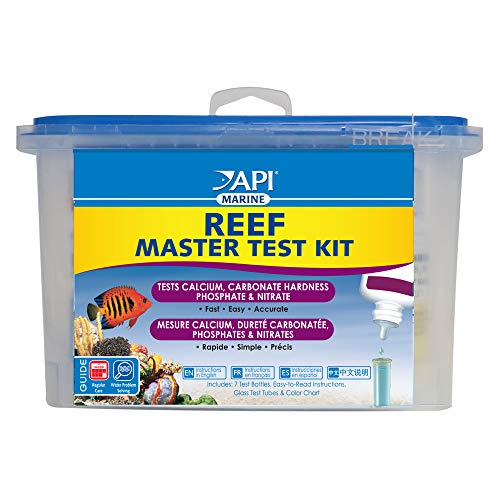
Contains one (1) API REEF MASTER TEST KIT Reef Aquarium Water Test Kit 1-Count, including 7 bottle of testing solution, 2 color cards and 4 test tubes with cap

Contains one (1) API CALCIUM TEST KIT Saltwater Aquarium Water 1-Count Test Kit, including 2 bottles of testing solution and 1 test tube with cap
How to Use Water Changes to Effectively Decrease Calcium
Performing water changes of 10-15% weekly or biweekly is the most effective way to gradually decrease calcium levels in your reef tank. This consistent approach allows you to replace high-calcium water with lower-calcium replacement water, helping to lower calcium slowly over time without stressing your corals or destabilizing water chemistry. To ensure stability, match the new water’s parameters closely to the tank’s original levels—calcium within 10-20 ppm, salinity within 0.001 SG, temperature within 1-2°F, alkalinity within 0.5-1.0 dKH, and magnesium around 50 ppm. Use RODI water, heat it to the tank’s temperature, and mix it with the proper amount of salt before testing all parameters. Regular small changes prevent rapid fluctuations, supporting overall reef health and preventing stress to your corals. Monitoring water parameters frequently helps you maintain the ideal conditions during the adjustment process, especially considering the importance of consistent marine water chemistry. Additionally, understanding the role of aquarium water parameters can help you better tailor your water change routine to effectively manage calcium levels.

6 Stage Home Water Filtration System: Max Water 6-stage reverse osmosis deionization system RO-DI impurity particles down to 1/10,000 of a micron effectively filter out...
Balancing Calcium With Alkalinity and Magnesium
Maintaining a stable reef tank requires keeping magnesium around 1300 to 1350 ppm. Magnesium is crucial because it serves as the foundation for calcium and alkalinity stability. If magnesium levels fall below 1200 ppm, calcium and alkalinity become unstable and tend to drift out of balance. Natural seawater maintains the proper ratio, with magnesium roughly three times the calcium concentration. Regular testing of magnesium levels, along with adjustments through supplements, is essential to prevent fluctuations. When balancing these parameters, prioritize consistency—aim for stable levels that support a stable pH around 8 dKH—rather than chasing perfect numbers. Troubleshoot magnesium first if imbalances occur, then make gradual adjustments to calcium and alkalinity. Rapid shifts can harm coral growth and overall reef health, so gradual changes are key. Proper measurement methods are important to accurately assess these parameters and maintain optimal conditions, and understanding natural seawater ratios can help guide your supplementation decisions.
Smart Strategies for Long-Term Calcium Stability
Achieving long-term calcium stability requires maintaining target levels around 400 to 450 ppm, with adjustments based on your salt mix and livestock needs. Consistency is more important than chasing a perfect number because coral calcification and algae growth respond better to stable conditions. Regular testing is crucial: daily tests in new setups, two to three times weekly in demanding tanks, and weekly in stable systems. Monitoring calcium fluctuations closely promptly detecting trends allows you to make timely adjustments. Use water changes strategically by implementing small, frequent adjustments rather than large swings to avoid destabilizing calcium levels. Carefully observing and calcium consumption rates helps tailor supplementation to your tank’s actual needs, starting with minimal doses and increasing gradually as needed. Ensuring proper water parameter stability and precise dosing prevent fluctuations, keeping calcium levels steady over time. Following these strategies helps promote healthy coral growth and suppresses unwanted algae proliferation caused by calcium instability.

The calcium buffer system is a two-component liquid supplement system that is simple, easy to use and the best alternative to a calcium reactor.

[Precision Dosing] This innovative dosing container, ensures accurate and hassle-free dosing for your aquarium or water tanks. Say goodbye to manual measurements and enjoy the convenience of precise dosing at the touch of a button.

Common Mistakes to Avoid When Adjusting Calcium Levels
Avoid adjusting calcium levels too quickly. Rapid increases, such as raising calcium from 360 ppm to 430 ppm in a single day, can cause calcium precipitation and disrupt reef chemistry. Instead, split the correction over several days to maintain stability. This gradual approach helps preserve the delicate calcium-alkalinity balance, which is essential for healthy coral growth. Dosing slowly minimizes stress on your tank’s chemistry and allows your corals and other inhabitants to adapt smoothly. Never ignore alkalinity during calcium adjustments, as both parameters are interconnected. Failing to monitor or adjust alkalinity can worsen imbalances and lead to unstable water chemistry. Mixing or dosing calcium and alkalinity additives improperly can also result in precipitation, further complicating the reef environment. Regular testing is crucial—aim for weekly tests or more frequently during periods of rapid growth. Consistent monitoring ensures you stay within target levels and avoid unintended fluctuations. Additionally, always check magnesium levels first, because low magnesium can hinder calcium management and cause unpredictable changes in calcium levels. Maintaining appropriate water chemistry parameters such as magnesium helps stabilize calcium levels during adjustments.
Tips for Maintaining Stable Calcium in Your Reef Aquarium
Maintaining calcium stability requires a consistent routine of monitoring and supplementation tailored to your coral’s needs. Use matching supplementation methods such as two-part solutions, calcium chloride, or a calcium reactor based on your tank’s size and growth rate. Keep alkalinity and magnesium levels within optimal ranges to prevent nutrient competition that hampers calcium absorption.
Test calcium levels weekly or more frequently during rapid coral growth to track trends accurately. Record your measurements to make precise adjustments to your dosing schedule. Regular small water changes, typically weekly with constant volume and timing, help prevent sudden fluctuations in calcium concentrations.
Dosing calcium separately from alkalinity by 30 to 60 minutes provides more stable calcium levels and minimizes chemical interactions. Adhering to these practices creates a balanced environment that reduces swings and supports healthy coral growth, ensuring your calcium levels remain consistently optimal.

HIGH-CONCENTRATION IONIC MAGNESIUM SOLUTION - Magnesion Liquid Reef Salt Water Conditioner is a high-concentrate solution for maintaining the optimal balance in aquarium reef tanks. Magnesium salt regulates aquarium calcium and carbonate concentrations to prevent excessive inorganic precipitation

High concentration ionic calcium solution. Contains 160,000 ppm Calcium.

Liquid organic calcium source