
Dealing with cyanobacteria in your reef tank can feel frustrating, especially when it starts to overrun your corals and rockwork. It’s a common issue that often points to nutrient imbalance, poor water flow, or improper lighting.
By mastering a few key strategies—like controlling nutrients, improving flow, and managing light—you can keep cyanobacteria at bay.
The full details below will help you regain a clean, healthy reef environment.
What Causes Cyanobacteria to Grow in Reef Tanks?
Cyanobacteria growth is typically caused by nutrient imbalances in reef tanks, especially excess nitrate and phosphate. These nutrients promote algae outbreaks, with blooms often forming in areas where nutrients accumulate. Overfeeding fish, decaying food, and fish waste can increase nutrient levels, creating favorable conditions for cyano proliferation. Skipping water changes allows these nutrients to build up over time, leading to persistent outbreaks. Poor circulation and dead spots around rocks and sand beds contribute to stagnant areas where cyanobacteria can thrive, especially when debris collects and organic matter decomposes. Additionally, detritus buildup and organic-rich substrates act as long-term nutrient reservoirs, encouraging regrowth if they are not mechanically removed. Regular inspection and prompt removal of detritus buildup can significantly reduce the likelihood of cyanobacteria outbreaks. Proper tank monitoring and adjusting light conditions can also help minimize cyanobacteria proliferation, as excessive or improper lighting often fosters their growth. Implementing biological supplements that promote healthy bacteria can help improve nutrient export, but maintaining adequate flow, performing regular water changes, and controlling algae are key strategies to prevent future cyanobacteria outbreaks. Proper tank maintenance and monitoring are essential to prevent conditions that favor cyano growth.
How Can I Spot Cyano in My Aquarium Early?
Early signs of cyanobacteria include small patches or crusts that can be identified by their color and texture. Look for blue, green, or red-brown crusts along the tank edges, substrate, or on rock surfaces. These patches often start as thin, slimy layers that peel off easily and can resemble a jelly-like film. You may also notice thick, puffy growths or swirling patches beneath the water surface in specific areas. Pay special attention to zones with low water flow or behind decorations, as these spots are common starting points for colonies. Surface films near return gaps or overhangs can appear before larger mats form, serving as early indicators. Incorporate regular visual inspections of edges, substrate, and decor to catch small colonies early. Small, subtle changes in water color or a thin surface scum can also signify the initial stages before the growth becomes more pronounced. Monitoring water parameters, such as nutrient levels and pH, can help identify environmental conditions conducive to cyanobacteria growth and enable proactive management before extensive blooms develop. Being familiar with common cyanobacteria growth patterns can improve your ability to detect signs early. Staying alert to these early signs can help prevent the spread of cyanobacteria and reduce the effort needed to control it. Additionally, understanding aquarium environmental factors can assist in creating conditions less favorable for cyanobacterial proliferation.
Effective Mechanical Methods to Remove Cyanobacteria
Mechanical removal is one of the fastest ways to control cyanobacteria buildup in your reef tank. During water changes, use a half-inch to 3/4-inch hose, hovering it just above the slime to siphon out cyanobacteria from rocks, sand, and narrow crevices. For stubborn mats, manual tools like a baster or small pump can dislodge cyanobacteria, especially on coral surfaces and rocky areas. Capture floating fragments with a siphon or a filter sock before they settle back into the tank. Make sure to clean or replace filtration media daily to prevent re-growth. When vacuuming the substrate, work carefully from the top down, lifting embedded cyanobacteria without disturbing the entire substrate. Implementing regular mechanical cleanup helps to physically remove the persistent colonies before they have a chance to spread further. Ensuring proper water circulation throughout the tank can also prevent stagnation and discourage cyanobacteria growth. Proper filtration systems are essential to maintain optimal water quality and support biological balance. Additionally, increasing water flow can help prevent dead spots where cyanobacteria tend to flourish. Combining these mechanical methods with biological strategies ensures a comprehensive approach to keeping cyanobacteria under control and promotes a healthier reef environment.

Versatile Cleaning Kit: Our aquarium gravel vacuum cleaner kit is a multi-functional solution for all your aquarium maintenance needs. It utilizes the siphon design principle to perform essential tasks such as aquarium cleaning, sand washing, algae scraping, fish excrement removal, debris elimination, and water changes. Equipped with three independent cleaning heads, our kit allows you to effortlessly tackle various tasks with ease.

✮Important Reminder: The faucet connector included is not universal. Please refer to the displayed picture to check the compatibility with your faucet before placing an order.

How to Improve Water Flow to Keep Cyano at Bay
Improving water flow to prevent cyanobacteria buildup involves maintaining circulation levels around 10 times your tank volume per hour. Reposition pumps and powerheads to focus on areas where flow naturally weakens, such as corners, behind rockwork, and along the sandbed. Creating turbulence with overlapping flow patterns and cross-currents helps disrupt stagnant pockets and suspends organic particles that could feed cyano. Adding extra pumps or wavemakers can enhance coverage and maintain constant flow, reducing dead zones without stressing your livestock. Regularly check the effectiveness of your water movement, especially after aquascaping or introducing new animals, and adjust pump placement accordingly. Proper circulation, with broad and random turbulence, is key to keeping a healthy environment and controlling cyanobacteria growth. Additionally, using appropriate lighting can help prevent algae and cyano from thriving, ensuring a balanced tank ecosystem. Implementing effective water movement techniques can further optimize flow distribution and minimize stagnation, aiding in cyanobacteria control. Ensuring consistent water parameters supports optimal flow and discourages cyanobacteria proliferation.

★sine wave technology , Ultra silent operation.

Recreation Of Ocean Flow -- hygger crossflow wave maker creates a wide, comprehensive current instead of a narrow jet, can reach to the opposite side of 2.6 feet. It circulates water efficiently across the entire tank, preventing dead spots and helping keep debris suspended for filtration. It’s dual outlets can be able to move each side individually to create indirect chaotic flow, which the corals thrive in
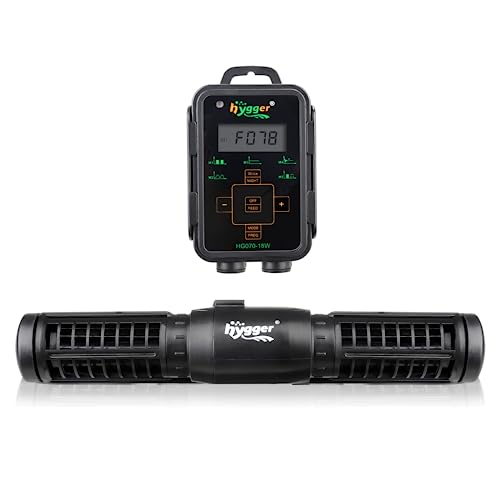
UNIQUE CROSS FLOW TECHNOLOGY - Compared to traditional wave makers, this cross flow pumps generate soft waves and the waves are spread 360 degrees. It creates a water flow similar to real ocean, activates the water in the entire tank, eliminates dead spots, and creates a beautiful fish gathering shape
Managing Nutrients and Detritus to Prevent Cyano Outbreaks
Regularly siphoning cyano mats with fine netting or a small hose removes physical mats before they decompose. This process helps suppress algae by preventing detritus buildup. Vacuum the sandbed and clean filter socks frequently to remove trapped waste that fuels nutrient levels. Limiting feeding reduces excess nutrients from uneaten food, which decomposes into phosphate and nitrate. Performing water changes with high-quality RO/DI water and using efficient protein skimming assist in exporting dissolved organics. Maintaining stable nutrient levels—such as keeping phosphate around 0.02 to 0.06 ppm and nitrate at 10 to 15 ppm—supports biological control. Regular testing and monitoring Proper nutrient management ensure nutrient balance, preventing detritus accumulation that can trigger cyano outbreaks and promoting a healthier, algae-free reef environment. Additionally, implementing detritus removal methods can significantly minimize organic buildup that fosters cyano growth, creating a more stable and healthy reef system. Consistent water parameter monitoring further enhances the effectiveness of these prevention strategies by detecting potential issues early.

High-Efficiency Aquarium Protein Skimmer – Powerful protein skimmer for aquarium generates dense micro-bubbles to quickly remove organic waste, proteins, and impurities from saltwater, reef, and marine fish tanks, keeping water crystal clear and healthy for your fish and corals.

Why Choose the MAGTOOL Protein Skimmer? Dissolved organic waste builds up in marine aquariums, reducing water quality and stability. The MAGTOOL protein skimmer uses foam fractionation to remove organic compounds before they become harmful, reducing biological load at the source and maintaining a cleaner, healthier reef environment.

Efficient Organic Waste Removal: Equipped with a powerful DC pinwheel pump, this protein skimmer creates dense, fine bubbles that efficiently separate organic waste, keeping your aquarium water clear
How to Use Lighting and Blackouts to Suppress Cyano Growth
Adjusting your lighting schedule is crucial for controlling cyano growth. Limit your tank’s light exposure to 8–10 hours per day. Longer light periods, like 16 hours, can promote cyanobacteria proliferation. Start by reducing your existing schedule from 16 to 12 hours, then gradually decrease it further over time.
Spectrum adjustment is equally important. Aim to keep lighting within the 12,000–20,000 Kelvin range, avoiding warm, red, or yellow hues that favor cyanobacteria. Use LEDs with adjustable spectrum settings to reduce red and yellow wavelengths. Ramp the intensity of your lights gradually up and down to prevent stressing your corals.
Proper light spectrum management enhances the effectiveness of your control efforts. After successfully controlling cyanobacteria, reintroduce light slowly. Observe your tank for signs of regrowth. Incorporating light cycle optimization can help prevent the reappearance of cyanobacteria by maintaining a balanced light environment. Combining lighting control with proper water flow is essential, as stagnant areas can still harbor cyanobacteria despite lighting adjustments. Keep flow consistent and avoid dead spots to maintain a healthy, cyano-free environment. Implementing additional water quality management practices can further improve your tank’s overall health and help prevent future cyanobacteria outbreaks.

Adjustable LED Coral Light: Customize your full spectrum aquarium lighting with three adjustable modes - Remote, Manual Dimmer and Smart Controller; the LEDs are distributed in 4 separate channels, you can adjust the colors and brightness to your likings

VIPARSPECTRA timer control series V165 LED aquarium light is scientifically engineered to keep the balance of the PAR output and perfect for 24"x24" coverage

★[DIY MODE]: Time, Colour and Brightness 3 setting choose. Timing (Timer control key): 3 choices timer running for 6 hours, or 10 hours, or 12 hours; Brightness/On-Off key: 10 level brightness and Switch function. Colour(W/B key): 3 colour modes choose, All lights on, White/Red/Green/Pink, Only Blue
When and How to Safely Use Chemical Treatments for Severe Outbreaks
Chemical treatments should only be used when cyanobacteria outbreaks become severe enough to threaten your corals or persist despite manual removal and water quality improvements. Before applying products such as Chemi-Clean or hydrogen peroxide, prepare your tank thoroughly. Remove visible mats by siphoning, then perform a large water change of around 30 percent to reduce organic load. Turn off protein skimmers and remove activated carbon to prevent chemical interference, and increase aeration to ensure sufficient oxygen levels during treatment. Proper dosing is critical, as overdosing can lead to tank crashes and harm beneficial bacteria. Dissolve the chemical in tank water according to the manufacturer’s instructions and distribute it in areas with high flow for even coverage. Apply the treatment carefully, monitoring dosage precisely to avoid overdosing. Follow the recommended contact time—typically 48 hours—and conduct subsequent water changes as advised by the product instructions. Keep a close eye on the tank’s inhabitants throughout the process, adjusting or halting treatment if any signs of stress or adverse reactions appear. Proper chemical application is essential to ensure safety and effectiveness in controlling severe cyanobacteria outbreaks. Additionally, understanding aquarium water chemistry can help prevent future cyanobacteria issues by maintaining optimal conditions, such as proper nutrient levels and flow rates, which are crucial in preventing algae growth.

Contains only food-grade hydrogen peroxide and purified, deionized water. No stabilizers or additives. The hydrogen peroxide solution is NSF Certified to NSF/ANSI/CAN 60 for drinking water treatment chemicals and NSF/ANSI/CAN 50 for pool, spa, hot tub, and other recreational water treatment chemical use.


This is for 2 small bottles of Söchting Oxydator Solution. Size: 82.5ml/bottle 4.9% H2O2
Long-Term Habits for a Healthy, Cyano-Free Reef
Consistent nutrient control and flow management are key to maintaining a cyano-free reef. Regular water changes of 10-20% weekly using RO/DI water help export excess nutrients that fuel cyano growth. Incorporating protein skimmers, GFO, or refugiums effectively reduces nitrates and phosphates before they promote algae buildup. Feeding is best kept controlled and infrequent to prevent organic waste from accumulating.
Ensuring dead-spot-free flow with powerheads or wavemakers keeps detritus suspended and supports filtration. This prevents stagnation areas where cyano can take hold. Regularly cleaning mechanical filters and siphoning debris from the sand and rock surfaces help sustain long-term tank stability. Maintaining moderate, consistent lighting within 8-10 hours and avoiding excessive brightness or heat limits cyano’s energy source. This combination of habits promotes a vibrant, healthy, algae-free reef environment.
Troubleshooting Persistent Cyano Problems and When to Seek Help
Persistent cyano outbreaks often indicate underlying issues that haven’t been fully addressed, such as dead spots, detritus buildup, or nutrient imbalances. If cleaning and flow adjustments don’t resolve the problem, you should investigate algae control practices and assess water chemistry more thoroughly. Test nitrate, phosphate, and other key parameters; maintaining a balanced phosphate-to-nitrate ratio prevents regrowth. Stagnant zones behind rocks or trapped debris can harbor cyano, so inspect flow patterns carefully and remove waste manually. If basic tests don’t reveal the cause, consider broader water analyses like ICP testing. When cyano keeps returning despite these efforts, you might need to escalate with blackout treatments or chemical solutions. Persistent outbreaks often signal unresolved husbandry or equipment issues, so seek expert advice if necessary. Knowing the underlying causes of cyano outbreaks is essential for effective long-term management.