
Wondering how big a 75-gallon tank actually is? Many tanks have similar dimensions, typically around 48 inches long, 18 inches wide, and 21 inches high.
But variations can happen based on shape and manufacturer. Knowing these measurements helps you plan for space, weight, and setup.
Keep reading to get all the details you need to pick the perfect tank for your space.
What Are the Standard Dimensions of a 75-Gallon Aquarium?
The standard dimensions for a 75-gallon aquarium are approximately 48 inches in length, 18 inches in width, and 21 inches in height. These measurements provide a balance between size and practicality, making it suitable for many home setups. The typical rectangular tank offers a four-foot-long footprint with a consistent 18-inch width and a standard height of 21 inches. Some tanks may vary slightly in height or depth depending on the manufacturer, but these dimensions are the most common. Knowing these measurements helps you choose compatible filters, heaters, and lighting, ensuring your aquatic environment functions smoothly and provides ample space for your fish and plants. Proper aquarium sizing is essential for maintaining a healthy ecosystem. Additionally, understanding the dimensions allows you to plan your space effectively and select the right stand or cabinet to support the tank securely. Being aware of standard tank measurements can also help you anticipate potential upgrades or modifications in the future.

WITH BIO-WHEEL TECHNOLOGY: BIO-Wheel technology provides wet/dry biological filtration.
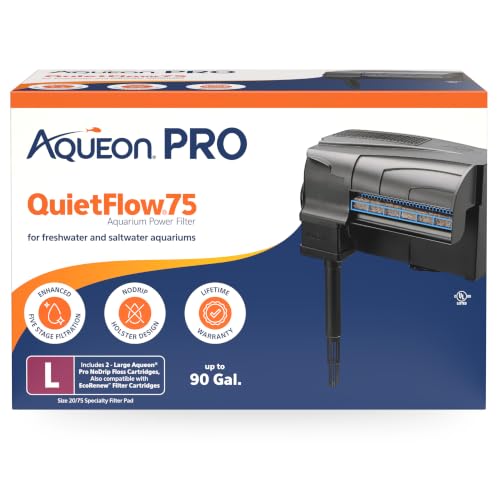
POWERFUL 5-STAGE FILTRATION SYSTEM: Dense floss for particles, carbon to remove toxins and odors, Bio-Holster and Bio-Media grid for biological filtration. Specialty pad for customized filtration.
How Do Different Shapes and Variations Affect 75-Gallon Tank Sizes?
Shape and design variations significantly influence the dimensions of a 75-gallon tank, even when the volume remains constant. For example, a hexagon tank might measure approximately 28 by 24 by 30 inches, while a pentagon tends to be around 30 by 30 by 24 inches. These differences affect how you arrange aquascaping and fit the tank into your space. Taller tanks provide vertical display options but may restrict horizontal swimming space, whereas longer tanks enhance horizontal areas but limit height. Variations like bow front or flat back hexagon often do not hold exactly 75 gallons, with their sizes estimated based on shape. Overall, the shape impacts interior space calculation, functionality, and display, as well as material durability and footprint considerations. Aquarium tank sizes can vary widely based on shape, making it crucial for buyers to consider these factors when selecting a tank. Additionally, understanding how each shape influences the interior volume helps ensure you select a tank that meets your specific needs. You may also want to consider the material thickness as it affects both durability and internal volume.
What Are the Typical Weights and Installation Considerations for a 75-Gallon Tank?
The weight of a 75-gallon tank varies based on its material. An acrylic tank is lighter, typically around 80 to 100 pounds when empty, while a glass tank often weighs between 140 and 150 pounds without water. When filled with freshwater, the total weight increases significantly to approximately 699 pounds, and with saltwater, around 715 pounds. Keep in mind that the overall weight also includes substrate, décor, and equipment, which can add an extra 200 to 400 pounds, bringing the total system weight to around 900 to 1,100 pounds. Additionally, proper weight distribution** ensures the longevity and safety of the tank setup. Proper weight distribution is crucial; a sturdy, level stand designed specifically for aquarium loads ensures safety and longevity. It is essential to verify that your floor and stand can support this combined weight, especially if the tank is placed on upper floors or older structures. Ensuring adequate support prevents stress on the glass and reduces the risk of accidents or structural damage over time. To mitigate potential issues, supporting structures should be reinforced or evaluated before installation. Furthermore, understanding the weight capacity of your flooring** can help prevent costly structural problems in the future.

Large Capacity Support: Designed for 55-75 gallon aquariums, this heavy duty fish tank stand features a spacious 51.3" L x 19.7" W top panel with a weight capacity of up to 850 lbs. The sturdy surface provides a reliable foundation for your aquarium while creating an impressive centerpiece for your living room, office, or hobby space

Large-Capacity Aquarium Stand: The 52.0"L x 19.7"W top easily holds a 55-75 gallon aquarium and most standard fish tanks. The 23.6"L x 18.9"W bottom is perfect for a 10-20 gallon small tank or reptile/amphibian enclosure, creating an orderly aquatic space
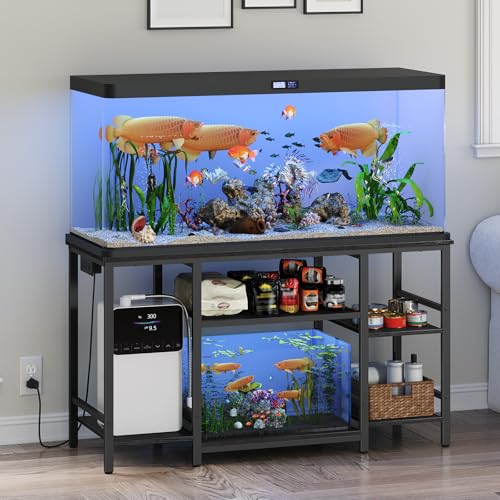
Large-Capacity Aquarium Stand: The 52.0"L x 19.7"W top easily holds a 55-75 gallon aquarium and most standard fish tanks. The 23.6"L x 18.9"W bottom is perfect for a 10-20 gallon small tank or reptile/amphibian enclosure, creating an orderly aquatic space
How Do I Choose the Right 75-Gallon Tank for My Space and Needs?
To select the right 75-gallon tank for your space, start by measuring your available area precisely. Consider doorways, ceiling height, and clearance needed for maintenance routines, water circulation, and lighting setup. Rectangular tanks are ideal in open living spaces because they provide broad views and make efficient use of room width. Conversely, corner or tall vertical tanks fit better in smaller or narrow spaces, saving room while still offering ample volume.
Keep your décor and substrate capacity in mind, as these influence equipment placement and how much reinforcement your stand requires. External filters typically suit rectangular tanks because they can be positioned conveniently outside the tank, maximizing space and ease of access. Internal filters, on the other hand, work best with corner models where space inside the tank is limited. Understanding tank dimensions is essential for ensuring proper fit and compatibility with your space and setup.
Planning your entire setup in advance is crucial to avoid space constraints that could limit your options or lead to a crowded environment. Proper planning helps optimize water circulation and lighting, which are essential for a healthy environment. Also, consider your budget and long-term maintenance needs; selecting a tank that meets both your space constraints and functional requirements ensures a satisfying and sustainable aquarium experience. Additionally, understanding the dimensions of different tanks can help you make more informed decisions when selecting a model.

【Robust & Durable Construction】Crafted with steel crossbars and reinforced wood panels, this stand boasts a weight capacity of up to 1000 lbs. Its sleek dimensions—49" L x 19" W x 31.7" H—are tailored to optimize vertical space, making it an ideal fit for 55-75 gallon main tanks.

Fits One Side of 75/90/110 gal Gallon Fish Tanks (Aqueon, and All Glass Aquariums). There are different aquarium manufactures. PLEASE MEASURE your tank opening to the closest millimeter before purchasing!

COMPLETE GLASS AQUARIUM KIT*: The kit includes a 55-gallon glass tank with two hinged hoods for easy access, white LED lights, a Tetra Whisper PF60 Power Filter with two Tetra Large Bio-Bag Filter Cartridges, a 200-watt Tetra heater, a thermometer, a fish net, a Tetra AquaSafe water conditioner sample, a TetraCare brochure and an aquarium set-up brochure.
What Variations in 75-Gallon Tank Sizes Should You Know About When Shopping?
Variations in 75-gallon tank sizes are important to consider because these aquariums come in multiple styles beyond the standard rectangular shape. While the typical 48 inches long by 18 inches wide and 20 to 21 inches high remains common, you can also find options like hexagon, pentagon, or bow-front designs. These shapes impact both the footprint of the tank and how you view your aquatic setup. Long tanks, usually around 72 inches in length, prioritize swimming space for active fish, whereas taller models focus on vertical display, which influences how you arrange plants, decorations, and filtration systems. Shape variations can also change the overall dimensions even if the tanks hold the same volume. Additionally, different shapes may require specific stands and supports to ensure safety and stability. Considering the dimensions and weight capacity of your tank is crucial for proper setup and securing the right stand. Always double-check the exact measurements and weight of the model you’re interested in, as these factors affect the stand choice and maintenance routines. Being aware of the space available in your room can help you select a tank that fits comfortably without overcrowding. Selecting the right size and shape will ensure your tank fits well within your space and meets your needs for both aesthetics and functionality.

850LBS HEAVY-DUTY SUPPORT: Built with a durable metal frame and reinforced structure, this 55-75 gallon aquarium stand supports up to 850 lbs, providing a stable and secure base for large fish tanks. The unique circle frame design adds structural support while creating a stylish centerpiece for your aquarium setup

SUPERIOR CAPACITY AND DIMENSIONS: Urban Deco's Fish Tank Stand, measuring 48.4"x19.7"x31.5", is robustly constructed to support up to 900 lbs, catering specifically to 55-75 gallon tanks. Its size and strength provide a perfect platform for your aquarium, ensuring stability without sacrificing style.

5-𝐈𝐧-𝟏 𝐏𝐨𝐰𝐞𝐫 𝐒𝐭𝐚𝐭𝐢𝐨𝐧: The 55-75 gallon aquarium stand includes a built-in charging station with 2 USB ports and 3 AC outlets. Power your filters, heaters, LED lights, and charge mobile devices simultaneously – keeping all your aquarium electronics organized and easily accessible.