
If you’re wondering how to safely raise alkalinity in your reef tank, it’s important to do so gradually to avoid stressing your corals.
Typically, you should increase levels by no more than 0.5 to 1.0 dKH each day using simple supplements like baking soda or soda ash.
Monitoring and steady dosing help keep your tank stable and healthy.
The details below will guide you step-by-step on maintaining proper alkalinity levels.
Understanding Reef Tank Alkalinity and Why It Matters
Maintaining alkalinity levels between 7 and 11 dKH is essential for a healthy reef tank. Alkalinity measures your water’s ability to neutralize acids, primarily through bicarbonate and carbonate ions that act as buffers. When alkalinity stays within this range, it helps keep pH stable, reducing stress on your corals and fish. Stable pH and alkalinity support coral calcification, the process by which corals build their limestone skeletons. Consistent alkalinity ensures that sufficient carbonate ions are available for this process, promoting healthy and robust coral growth. Monitoring water parameters regularly is key to preventing swings outside the ideal range, which can cause pH fluctuations and hinder calcification, risking damage to your corals and overall reef stability. Proper adjustments and testing methods are necessary to ensure your alkalinity remains balanced, fostering a resilient reef and thriving environment. Additionally, understanding how alkalinity impacts coral health helps aquarists maintain optimal conditions for their reef inhabitants.
How to Test Your Reef Tank’s Alkalinity Accurately
To test your reef tank’s alkalinity accurately, start by using clean, dedicated sample containers to prevent cross-contamination. Collect water samples carefully before adding any test reagents, and avoid pouring any leftover sample back into the vial to prevent skewed results. For colorimetric kits, fill the test vial to the exact volume specified by the manufacturer—commonly 4 mL, 5 mL, or 10 mL—and keep the outside of the vial clean and dry to ensure an accurate reading. When using a drop titration method, add the reagent slowly while swirling gently between drops, stopping once the color reaches the specified endpoint. If you are using a photometer or alkalinity sensor, turn the device on first, zero it with an untreated sample, add the reagent, and then mix thoroughly to get a precise reading. Proper maintenance of your testing equipment, such as testing devices, is essential for reliable and repeatable alkalinity measurements. Regularly calibrating your equipment with standard solutions further enhances measurement accuracy and confidence. Additionally, understanding alkalinity stability can help maintain consistent water parameters in your reef tank.

Salifert Alkalinity Test Kit: Measures calcium, magnesium and alkalinity levels in water
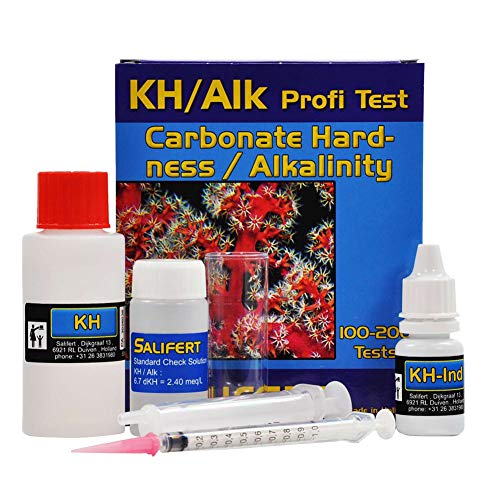
package height : 4.826 cm

What Is the Right Range for Reef Tank Alkalinity?
The ideal alkalinity range for your reef tank is between 8 and 9 dKH. This level closely mirrors natural seawater and helps maintain proper calcium balance and coral health. Many aquarists target this range because it supports stable chemistry and minimizes stress for corals and other invertebrates. For mixed reefs, a range of 7 to 11 dKH is acceptable; however, specific coral types influence optimal levels. SPS-dominant tanks may thrive at 7.5 to 8.5 dKH, while tanks with mainly LPS or soft corals often do better at 8.5 to 9.5 dKH. Maintaining consistency is more important than hitting an exact number, as rapid fluctuations can cause stress and harm coral growth. Adjusting lighting and coral feeding routines affects alkalinity consumption, so monitoring and stabilizing alkalinity within the recommended range promotes steady calcium levels and healthy coral development. Regular testing of alkalinity levels is essential for detecting changes early and preventing imbalances. In addition, understanding alkalinity stability can help prevent sudden shifts that stress corals. Properly managing alkalinity fluctuations is key to maintaining a resilient reef system, especially in the face of environmental changes. Implementing alkalinity supplementation techniques can also be beneficial for maintaining desired levels over time.
How to Safely Raise Your Reef Tank’s Alkalinity
To raise your reef tank’s alkalinity safely, you should increase it gradually, aiming for no more than 0.5 to 1.0 dKH per day. Start by verifying your current alkalinity with a reliable test kit, then retest after each dose to ensure accuracy and monitor trends. Adding buffers slowly helps prevent sudden swings that can stress corals and other inhabitants. Dissolve alkalinity supplements in RO/DI water before dosing to ensure complete mixing. Dose in high-flow areas of the tank to aid dispersion, and wait two to four hours before retesting. Always base your adjustments on consistent test results, avoiding corrections from any single anomalous reading, to maintain a stable, healthy reef environment. Regular testing and careful adjustments help manage water parameters effectively and support a thriving reef ecosystem. Additionally, understanding how different factors like lighting and nutrient levels influence algae growth can help prevent unexpected imbalances in alkalinity. Being aware of the impact of feeding routines can further help stabilize your tank’s chemistry and promote overall health.

The calcium buffer system is a two-component liquid supplement system that is simple, easy to use and the best alternative to a calcium reactor.

MULTIPLE COMPONENTS – Reef Code B is a multi-component automatic buffer that regulates pH. Unlike single-component KH products, it offers a two-part dosing method for calcium and carbonates (alkalinity) for a reef aquarium, mirroring the natural seawater ratios, providing a more stable environment

MULTIPLE COMPONENTS – Reef Code B is a multi-component automatic buffer that regulates pH. Unlike single-component KH products, it offers a two-part dosing method for calcium and carbonates (alkalinity) for a reef aquarium, mirroring the natural seawater ratios, providing a more stable environment
Which Alkalinity Supplements Work Best and How to Use Them
Kalkwasser or limewater is often considered the best alkalinity supplement for maintaining stability while raising pH and calcium levels simultaneously. It is particularly effective in small or low-demand systems because it naturally buffers the tank without causing rapid shifts. You can dose kalkwasser via an automatic top-off (ATO) reservoir or dosing pumps, which allows for steady, automated supplementation. This method helps keep alkalinity and calcium stable over time. Liquid sodium bicarbonate is a versatile, cost-effective solution for fine-tuning alkalinity; it provides gentle increases with minimal pH impact, making it suitable for delicate adjustments. For more predictable control, two-part systems that use sodium carbonate (soda ash) or sodium bicarbonate (baking soda) are popular choices. Sodium bicarbonate provides gentle alkalinity increases with minimal pH impact, making it ideal for fine-tuning. Sodium carbonate offers a stronger boost and raises pH more quickly but requires slow, measured dosing to prevent sudden changes. Both options enable you to adjust alkalinity and calcium independently, offering greater control for maintaining a stable reef environment.
Calcium reactors and regular water changes are also effective long-term methods for maintaining alkalinity levels. These support system stability when combined with DIY supplementation tailored to your tank’s specific demands.

SUPPORTS CORAL GROWTH & SKELETAL DEVELOPMENT – Provides a balanced source of calcium and alkalinity essential for SPS, LPS, and soft coral reef tanks.

ESSENTIAL CALCIUM, STRONTIUM & MAGNESIUM: Brightwell Aquatics Kalk+2 provides the necessary calcium, strontium, and magnesium in the same ratios found in aragonite, supporting healthy reef-building invertebrates like corals, clams, and calcareous algae.

PURE: Reef Kalkwasser is a pure calcium hydroxide with unmatched purity and solubility characteristics.
Dosing Tips for Consistent and Safe Alkalinity Control
To maintain consistent alkalinity levels, aim for 8 to 24 small, precise doses per day. This frequent, steady approach helps prevent rapid shifts that can stress your corals or destabilize your tank. Use dosing equipment capable of small, accurate additions to distribute these doses evenly throughout the day. Avoid large, infrequent doses, as they can cause sudden alkalinity swings. Monitoring alkalinity regularly helps you adjust your dosing accurately and maintain stability. First, measure your consumption regularly by testing your tank’s alkalinity at the same time daily over several days. This will give you a clear baseline and help you adjust your dosing more accurately. When adding alkalinity solutions, do so in areas with high flow to facilitate mixing and avoid direct contact with corals or rocks, which can cause localized pH changes. Keep alkalinity and calcium dosing separate by at least 10 to 30 minutes to prevent chemical reactions that could interfere with either. Regular testing and slow, steady adjustments are essential for safe and stable alkalinity control, especially considering the chemistry of reef tanks. Incorporating constant flow within the tank can further improve the mixing and distribution of alkalinity additives, promoting a stable environment overall. Additionally, understanding the buffering capacity of your water can help you predict how your tank will respond to dosing and aid in precise adjustments.

Model :DP-4, Idea for Dosing CA / MG / AB Water or other liquid

PRECISION 4-CHANNEL AUTOMATIC DOSING: Features four independently controlled peristaltic pump heads to automate daily liquid additions of calcium, alkalinity, magnesium, trace elements, or liquid plant fertilizers.

High Capacity Dosing Range: Each channel provides 1 to 9999ml per day for flexible dosing requirements
How to Adjust Dosing When Alkalinity Changes
Once you’ve established your tank’s daily alkalinity consumption through regular testing, you can adjust your dosing accordingly. Use that data to determine how much alkalinity supplement, whether crystals or liquid, you need to add each day. When making adjustments, change the dose gradually by about 5% to 15% to prevent pH swings and destabilization. For stable reef tanks, limit daily corrections to 0.5 to 1.0 dKH, and distribute these doses throughout the day to minimize fluctuations. After adjusting, retest approximately 24 hours later, then again after 48 to 72 hours to confirm stability. If alkalinity continues to decline, increase your dose incrementally; if it rises, decrease accordingly. Consistent, moderate dosing helps maintain stable alkalinity levels, supporting coral growth without causing sudden changes. Additionally, maintaining stable calcium levels is essential, as fluctuations can indirectly impact alkalinity stability.
Troubleshooting Low or High Alkalinity in Your Reef
To troubleshoot low or high alkalinity, start by confirming your test results because errors or contamination can lead to false readings. Use a reliable testing kit and follow the instructions carefully to ensure accuracy. Once you have verified your readings, evaluate water stability over time to determine if alkalinity is truly out of range. Consistent fluctuations can indicate underlying issues. Maintaining proper dosing is essential, as irregular supplementation can cause alkalinity swings that are difficult to correct. Low alkalinity often occurs when coral and coralline algae demand exceeds your supplementation efforts or if water changes are inconsistent and involve low-alkalinity water. High alkalinity typically results from overdosing supplements or using salt mixes with high alkalinity without regular checks. Review recent dosing routines and the quality of your water changes to identify possible causes. Also, check other parameters like pH and carbon dioxide levels, since poor gas exchange can mask alkalinity problems. Regular testing and monitoring help you understand alkalinity levels more accurately and prevent sudden shifts. Understanding alkalinity levels is vital for keeping your reef tank stable, and maintaining optimal water chemistry ensures your corals thrive. Making small adjustments—around 1 dKH per day—helps prevent stressing your corals and maintains water stability. Always aim for gradual changes to keep your reef chemistry balanced and healthy.

Professional Quality Testing Kit: The AAwipes Aquarium test kit (50 strips) is developed by experts for fish enthusiasts. It offers 8-in-1 testing capabilities, made with high-quality fiber paper and non-bleeding colors. The kit measures key parameters like Free Chlorine, Nitrate, Nitrite, Hardness, Sodium Chloride, Total Alkalinity, pH and Ammonia nitrogen. By identifying potential issues, our fish tank testing kit helps prevent hidden water problems and ensures the safety and well-being of your fish.
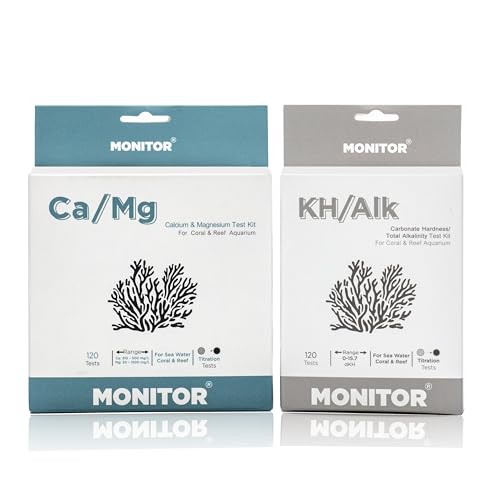
The measurement range of Ca is from 310 – 500 part per million (ppm) with the resolution of 5 ppm per 0.01ml of graduated syringe.

Test alkalinity (KH) level in saltwater reef aquarium and aquaculture.
Maintaining Stable Alkalinity With Water Changes
To maintain stable alkalinity during water changes, ensure that the alkalinity of the new saltwater matches your tank’s level within 0.2 to 0.5 dKH. Small, frequent water changes of about 5–10% weekly are ideal for preventing large fluctuations, which can stress marine life and promote unwanted algae growth. Always mix your saltwater a day or two in advance and test its alkalinity to confirm it aligns with your tank’s parameters. Keep salinity and temperature consistent during each change to minimize sudden shifts. After replacing water, retest the alkalinity within 24 hours and adjust gradually if necessary. Water parameter stability** is essential for maintaining a healthy reef environment, and consistent water management helps control algae and support proper lighting conditions. Regular testing and alkalinity management** are essential for maintaining a healthy reef environment.
Common Mistakes to Avoid When Managing Reef Alkalinity
Ignoring proper alkalinity testing is a major mistake because inaccurate readings can lead to improper dosing and unbalanced tank conditions. Always verify your test results with a second measurement before making adjustments to ensure accuracy. Regular water changes help maintain stable parameters, and combined with consistent dosing, they support overall tank stability. Consistent dosing is crucial—add small, regular amounts based on your coral’s consumption rather than guessing. Overdosing with supplements like soda ash or bicarbonate can cause rapid alkalinity swings, which stress corals and other inhabitants. Remember, slow and steady changes are better than large, abrupt adjustments that can destabilize your reef. Regular testing combined with controlled, incremental dosing helps maintain stable alkalinity levels and supports a healthy, thriving tank.