
If your reef tank’s alkalinity feels off, you might be wondering how to bring it back into balance. Lowering alkalinity safely involves gradual steps that allow your corals to adjust and absorb carbonate naturally.
By making careful water changes and reducing supplements, you can restore stability without stressing your tank inhabitants.
Keep reading for simple, effective techniques to lower alkalinity in your reef environment.
Why Testing Your Reef’s Alkalinity, pH, and Calcium Matters
Testing your reef’s alkalinity, pH, and calcium is crucial because stable water chemistry directly impacts coral health and growth. Maintaining these parameters within their target ranges ensures vibrant coloration and efficient nutrient cycling. Alkalinity acts as a buffer, helping resist pH fluctuations that can stress corals, while proper calcium levels support healthy skeleton formation. Regular testing allows you to detect signs of coral consumption or stress before they become visible problems. Monitoring pH helps identify system stability issues, such as excess CO₂ or buffering failures. Keeping these parameters balanced promotes steady calcification, enabling corals to grow strong and retain their vivid colors. Using the right water conditioner salt is essential to achieve consistent mineral levels. Additionally, understanding the effects of alkalinity fluctuations can help you make informed adjustments, preventing sudden changes that could harm your reef. Being aware of the test kits and equipment available ensures more accurate readings, leading to better management of your tank’s chemistry. By staying proactive with testing, you can catch imbalances early and maintain a resilient, thriving reef ecosystem.
How to Test Reef Alkalinity and Confirm Your Readings
To test your reef’s alkalinity accurately, follow a structured process using reliable methods like titration kits or digital colorimeters. Begin by collecting a consistent water sample, typically 4 mL or 5 mL, ensuring you draw water to the bottom of the meniscus for precise measurement. Carefully adhere to the test instructions—whether adding reagent drops one at a time or timing the reading with a digital checker—without rushing. Confirm your results by performing a second test, especially if the readings are inconsistent or differ significantly. Regular testing at the same time each day allows you to monitor fluctuations and maintain stable alkalinity levels, supporting healthy coral growth and overall reef stability. Additionally, understanding the types of reef testing kits available can help you choose the most accurate method for your needs. Recognizing the importance of accurate readings is essential since it directly impacts the success of your reef care routine. To improve your results, consider calibrating your testing equipment regularly and following proper sampling techniques for more consistent and reliable data.

Salifert Alkalinity Test Kit: Measures calcium, magnesium and alkalinity levels in water
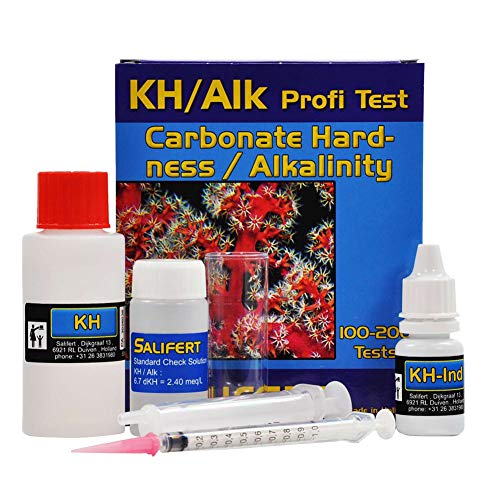
package height : 4.826 cm

Natural Ways to Gradually Lower Reef Alkalinity
To lower reef alkalinity naturally, stop dosing alkalinity supplements and gradually reduce your daily doses by 25-50%. Allow several days for corals and calcifiers to absorb carbonate and bicarbonate from the water, which will help stabilize alkalinity without causing shock. In heavily stocked tanks, alkalinity can decrease by 1-2 dKH each day as corals grow and build their skeletons. To support this process, reduce excess feeding, remove leftover food, and maintain stable temperature and pH levels. Consistent routine maintenance and close monitoring are essential, giving your system time—usually several days—to adjust naturally. This passive approach minimizes fluctuations and promotes a healthy reef environment. When comparing different methods, it’s important to consider their performance, cost, and suitability for your specific setup. Additionally, understanding the chemical balance of your water can help optimize alkalinity adjustments and promote coral health. Maintaining awareness of water parameters ensures that your adjustments remain safe and effective.

MULTIPLE COMPONENTS – Reef Code B is a multi-component automatic buffer that regulates pH. Unlike single-component KH products, it offers a two-part dosing method for calcium and carbonates (alkalinity) for a reef aquarium, mirroring the natural seawater ratios, providing a more stable environment
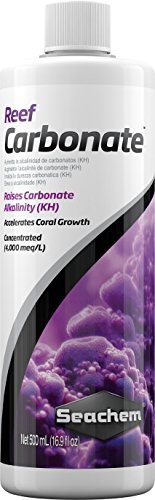
Raises carbonate alkalinity (KH)

The calcium buffer system is a two-component liquid supplement system that is simple, easy to use and the best alternative to a calcium reactor.
Using Water Changes With Low-dKH Salt to Correct Alkalinity
Using water changes with low-dKH salt is an effective way to lower reef tank alkalinity gradually and safely. Aim to replace 20–25% of your tank water daily or 5–10% weekly with freshly mixed low-dKH saltwater, ideally at 8 dKH or lower. This method dilutes alkalinity levels without relying on chemical additives, supporting stable coral growth and overall tank health. Always test the alkalinity of the new water before adding it to ensure it’s within 0.2–0.5 dKH of your target range. Identify the optimal water chemistry parameters to maintain a balanced reef environment and prevent fluctuations that could stress your corals. Monitor algae growth and sand substrate for signs of alkalinity imbalance, as excessive algae and sand cloudiness can indicate high alkalinity. Conduct post-change tests within 24 hours to verify the correction’s effectiveness. Regularly checking your water parameters helps maintain a balanced reef environment and prevent fluctuations that could stress your corals. Using water chemistry testing tools enables more precise adjustments and promotes a healthier reef tank. Adjust your water change frequency based on your corals’ demands and tank stability to avoid overshooting desired alkalinity levels.

FORMULATED SPECIFICALLY FOR REEF AQUARIUMS: Contains essential ocean reef elements in concentrations greater than those found in natural sea water

FORMULATED SPECIFICALLY FOR REEF AQUARIUMS: Contains essential ocean reef elements in concentrations greater than those found in natural sea water

Contains essential ocean reef elements in concentrations greater than those found in natural sea water
Safely Using Acid Dosing to Reduce Alkalinity (If Necessary)
If water changes with low-dKH salt are insufficient to safely lower alkalinity, acid dosing can be considered as a last resort. To do this, you need to carefully measure and introduce acid gradually, avoiding rapid pH drops that could harm your tank or livestock. Always verify alkalinity levels with a second test before proceeding, ensuring your initial readings are accurate. When adding acid, always dilute it in water first—never directly into the tank—and conduct a trial in a separate container to observe its effect. After dosing, ventilate or aerate the water well to facilitate pH stabilization. Limit daily alkalinity reductions to about 0.5 to 1.0 dKH to prevent stressing corals and livestock, especially in SPS tanks. Patience is key; make small, incremental adjustments over several days to maintain stability and prevent sudden pH swings. Being aware of alkalinity levels and monitoring them closely will help you achieve a safer balance during the process.

Model :DP-4, Idea for Dosing CA / MG / AB Water or other liquid
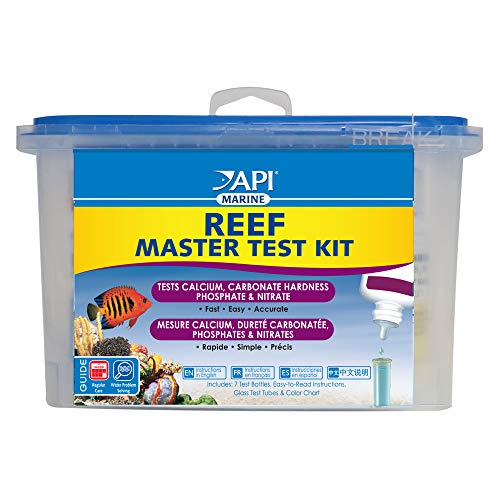
Contains one (1) API REEF MASTER TEST KIT Reef Aquarium Water Test Kit 1-Count, including 7 bottle of testing solution, 2 color cards and 4 test tubes with cap

PRECISION 4-CHANNEL AUTOMATIC DOSING: Features four independently controlled peristaltic pump heads to automate daily liquid additions of calcium, alkalinity, magnesium, trace elements, or liquid plant fertilizers.
How to Balance Calcium, Alkalinity, and Magnesium for Reef Stability
Maintaining proper magnesium levels, ideally around 1300 ppm, is essential for reef stability because it acts as a buffer for calcium and alkalinity. When magnesium drops below this range, calcium and alkalinity tend to precipitate out of solution more easily, making it difficult to keep them in balance. Therefore, the first step in stabilization is to correct magnesium levels before adjusting calcium or alkalinity. This approach helps prevent destabilization and ensures the elements remain dissolved and available for coral growth. Additionally, understanding the role of magnesium as a buffer in reef chemistry can help aquarists make more informed supplementation decisions. To do this effectively, use magnesium supplements formulated specifically for reef aquariums and monitor levels regularly. Gradual adjustments over several days prevent sudden shifts that could stress corals or destabilize your system. Consistency in dosing and close monitoring are key to maintaining long-term stability of calcium, alkalinity, and magnesium, supporting healthy coral growth and a resilient reef environment. Recognizing the essential elements involved can help guide proper supplementation and stability, while also considering how magnesium’s buffering capacity influences overall water chemistry.

HIGH-CONCENTRATION IONIC MAGNESIUM SOLUTION - Magnesion Liquid Reef Salt Water Conditioner is a high-concentrate solution for maintaining the optimal balance in aquarium reef tanks. Magnesium salt regulates aquarium calcium and carbonate concentrations to prevent excessive inorganic precipitation

HIGH-CONCENTRATION IONIC MAGNESIUM SOLUTION - Magnesion Liquid Reef Salt Water Conditioner is a high-concentrate solution for maintaining the optimal balance in aquarium reef tanks. Magnesium salt regulates aquarium calcium and carbonate concentrations to prevent excessive inorganic precipitation

HIGH-CONCENTRATION IONIC MAGNESIUM SOLUTION - Magnesion Liquid Reef Salt Water Conditioner is a high-concentrate solution for maintaining the optimal balance in aquarium reef tanks. Magnesium salt regulates aquarium calcium and carbonate concentrations to prevent excessive inorganic precipitation
Monitoring Your Reef Parameters and Making Adjustments Over Time
Consistent monitoring of your reef parameters is essential for maintaining stability and spotting issues early. Focus on regularly testing alkalinity, pH, salinity, temperature, nitrate, phosphate, calcium, and magnesium together to develop a comprehensive history of your tank’s conditions. Tracking these variables over time helps you recognize gradual shifts and identify potential problems before they impact your corals. Keeping detailed records of test results further extends your ability to detect small changes and plan precise adjustments. Staying mindful of your aquarium water parameters helps you understand the overall health and stability of your reef environment. Regular data review allows you to respond proactively, stabilizing your reef environment through small, informed changes. Additionally, understanding the chemical balance within your tank can aid in making effective adjustments to lower alkalinity without disrupting other vital parameters. Maintaining a thorough understanding of reef tank chemistry can also help you prevent unintended fluctuations and promote a healthier aquatic ecosystem.