
Having the right humidity level in your snake’s enclosure is key to its health and comfort.
If your snake seems sluggish or its skin looks dull, humidity might be too low or too high.
By understanding how to monitor and adjust moisture levels, you can create a more natural environment that keeps your snake happy.
Keep reading to learn practical ways to maintain stable humidity in your setup.
How to Measure Snake Enclosure Humidity Accurately
To measure the humidity in your snake’s enclosure accurately, you should use a digital hygrometer placed at your snake’s level. Position the sensor in the microclimate where your snake spends most of its time—on the ground for terrestrial species or around the middle of larger enclosures. Avoid placing the sensor near heat sources like heat lamps or water bowls, as these can give skewed readings. Allow the hygrometer to stabilize for at least an hour before taking any readings, as immediate measurements might not reflect the true humidity levels. To ensure accuracy, verify your hygrometer with calibration techniques such as a salt-test and consider taking readings at multiple points within the enclosure. Proper placement and calibration of your hygrometer are key to maintaining optimal humidity for your snake’s health. Additionally, using multiple hygrometers in large or zoned enclosures can provide a more comprehensive understanding of the environmental conditions. Regularly maintaining and calibrating your hygrometers helps prevent inaccurate readings over time. Ensuring your hygrometer’s placement avoids evaporation effects will also help in obtaining consistent measurements. Incorporating accurate humidity measurement techniques is essential for creating a healthy environment for your snake.
Best Ways to Increase Water Evaporation for Higher Humidity
Increasing water evaporation effectively boosts humidity levels. To do this, keep the substrate inside the enclosure slightly moist—this promotes evaporation without making the environment overly damp. Choose a substrate material that naturally retains some moisture, such as coconut fiber or sphagnum moss, to support steady evaporation over time. Placing water dishes on the warm side of the enclosure encourages faster water vapor release since higher temperatures increase evaporation rates. Regular misting with a fine spray creates tiny droplets that evaporate quickly, directly raising humidity. Monitoring humidity levels regularly ensures that the environment remains within the optimal range for your snake’s health. Covering part of the enclosure lid helps trap the moist air, but ensure you do not seal it completely to allow proper airflow and prevent stale conditions. Replenishing and cleaning water dishes frequently maintains consistent evaporation and keeps the environment healthy. Incorporating evaporation surface area by adding plants or other decor can further enhance water vapor release. Additionally, maintaining proper air circulation within the enclosure prevents mold growth and helps distribute the humidity evenly. Understanding the relationship between temperature and evaporation is crucial to achieving optimal humidity levels. These steps combined create a controlled, high-humidity environment suitable for species that require elevated moisture levels.

NATURAL HUMIDITY CONTROL provided by this highly absorbent coconut husk substrate bedding effectively maintains humidity levels in tropical terrariums

Made from all-natural coconut husks

Natural and Organic Material: You will receive 2 pcs coconut fibre bricks, each size 7.8 x 3.9 x 1.97 inch, which are made from natural coconut fibre that is odorless, retains humidity well and also enhances the temperature of the aquarium while stimulating the natural digging and burrowing behavior of small animals, providing a cleaner and healthier living for reptiles, amphibians and invertebrates
Which Substrates Retain Moisture and Boost Humidity Fast
Coconut fiber and coco coir are among the best substrates for retaining moisture and boosting humidity quickly. They absorb water rapidly and hold it effectively, releasing moisture slowly over time. Properly hydrated, they can maintain high humidity levels throughout their depth, which helps stabilize enclosure humidity between mistings. Research shows that coconut coir has a high surface area that enhances moisture retention. High-quality sourcing is important to prevent deterioration and ensure long-term effectiveness. Using appropriate substrate choice can also prevent mold growth and substrate breakdown, contributing to a healthier environment for your snake. Selecting substrates with high moisture retention capacity is essential for creating a stable humid environment. Cypress mulch is also highly effective, often referred to as a humidity workhorse, because of its strong moisture retention capabilities. Sphagnum moss and moss blends are excellent for creating high-humidity zones, especially when layered to facilitate rapid increases in moisture levels. For durability and consistent moisture retention, choose high-quality coconut coir and cypress mulch sourced from reputable suppliers to prevent deterioration over time.
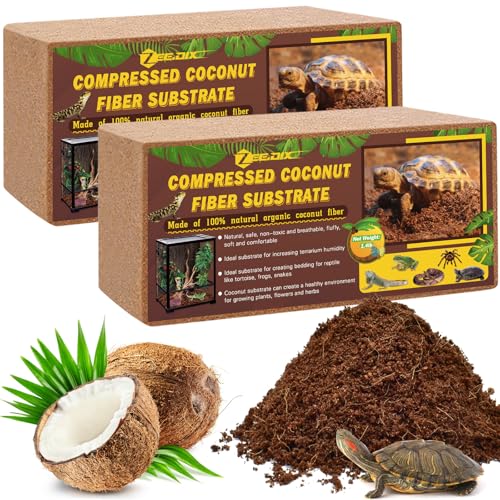
Package Includes - You will get 2 packs of 7.8 x 3.9 x 1.97 inch coconut fiber substrate, each weighs about 1.4 LB, ideal for animal bedding, making your pet cleaner and more comfortable while sleeping, eating and growing

6 Pack Coconut Fiber Substrate - You will get 6 packs of 7.8 x 3.9 x 1.97 inch coconut fiber substrate, each weighs about 1.4 LB, ideal for animal bedding, making your pet cleaner and more comfortable while sleeping, eating and growing

Ideal for naturalistic terrarium type set-ups incorporating reptiles, amphibians or invertebrates
How to Create a Humid Hide or Moisture Box for Shedding
To create an effective humid hide or moisture box, select a plastic container such as a Tupperware-style box with a secure lid. The container should be large enough for your snake to curl up comfortably but not so big that humidity cannot properly build inside. Position it on the warm side of the enclosure, typically where the temperature is between 80 to 85 degrees Fahrenheit, to promote evaporation. Placement is crucial; placing it on the warm-to-middle zone ensures the humidity levels increase and stay consistent, providing a proper shedding environment. Prepare the moisture moss by soaking long-fiber sphagnum moss in clean water for about 10 to 15 minutes, then gently squeeze out excess water until damp but not dripping. Fill the box about halfway with the prepared moss, keeping it loose to allow good air circulation. This setup delivers a moist environment your snake needs during shedding while avoiding waterlogging or excess moisture that could lead to mold or rot. Damp moss should be moist but not soaked, which helps prevent mold growth and ensures the humidity levels stay appropriate for your snake’s needs. Additionally, using proper humidity levels can significantly improve the shedding process and overall health of your snake. Ensuring proper ventilation in the enclosure can prevent stale air and minimize the risk of mold or bacterial growth, supporting a healthy environment. Maintaining adequate humidity is essential because it enhances the shedding process and reduces the risk of retained shed skin.

Ventilation Holes: 3 rows of 1mm diameter ventilation holes to meet the reptile high humidity is not easy to lose, but also can be used as a hatchery box

REPTILE CONTAINER: Made of high quality plastic material, stable and sturdy, easy to clean, great for temporary living or transportation.

Ample Quantity: our plastic reptile breeding boxes come in a package of 25, offering small reptile terrariums in vibrant red, blue, yellow, pink, and green; This ensures you have ample reptile breeding boxes for multiple pets or for replacements, providing a clean environment for reptiles
Quick Tips to Boost Humidity During Shedding Periods
To effectively boost humidity during shedding, focus on quick, targeted adjustments. Using humidity sensors helps you verify that your enclosure’s humidity rises sufficiently when needed. Increase misting frequency by misting the walls, substrate, or cooler side once or twice daily—this creates rapid humidity spikes without over-soaking the entire enclosure. Aim the mist on surfaces rather than flooding the habitat, and use warm water to prevent chilling your snake. Enhancing ambient moisture can also be achieved with a room humidifier, especially in dry seasons. Placing a large water bowl on the warm side of the enclosure encourages evaporation, boosting local humidity quickly. Additionally, adjust substrate moisture by mixing water into moisture-retentive substrates like coconut fiber, which maintains higher humidity levels for longer periods. Using a hygrometer to monitor humidity levels regularly helps ensure these quick adjustments remain effective and prevent under- or over-humidifying the enclosure. Incorporating proper ventilation ensures that excess moisture does not lead to mold or bacteria buildup.
How to Cover Enclosure Vents and Screens to Reduce Moisture Loss
To effectively reduce moisture loss while maintaining proper airflow, you should cover 60% to 80% of the surface area of enclosure screens. This level of coverage helps retain humidity without restricting essential ventilation. Use materials like aluminum foil, acrylic panels, or HVAC tape to partially cover the screens smoothly and securely. Secure the coverings with snake-proof fasteners to prevent escapes or damage. Start by covering around 60%, then wait 48 hours and monitor humidity levels. If necessary, increase coverage gradually to 80%, always ensuring some vents remain open to prevent stale air buildup and mold formation. This controlled approach balances moisture retention with air quality. Proper enclosure modifications are crucial for high-humidity species to thrive while minimizing mold risks.

2 Pack Of Zilla Reptile Screen Clips, 2 Clips Each

4-Pack: This product includes 4 clips for securing the screen top on the terrarium, suitable for reptile enclosures (snakes, lizards, hamsters, etc.) and aquariums, enhancing the overall stability of the tank.

Great for separating layers of substrates
Using Water Dishes to Maintain Proper Humidity Levels
Using water dishes is a straightforward and effective way to raise humidity levels in your snake’s enclosure. Place the dish in a warm area to enhance evaporation, but avoid positioning it directly under intense heat sources like heat lamps or heat lamps. Moving the dish toward the warm, or hot side, or placing it over a heat mat can further boost vaporization and increase humidity efficiently. The type of dish matters: larger, stable dishes prevent tipping, and deeper ones hold more water, which slows evaporation. Keep the water fresh by changing it weekly and ensure it’s dechlorinated. While a water dish alone won’t perfectly control humidity, combining proper placement, suitable dish size, and substrate adjustments creates a reliable method for maintaining proper moisture levels.

Available in assorted colors

Water dish with natural look integrates in any type of terrarium

DURABLE MATERIAL: The reptile ramp plate is made of environmentally friendly plastic material, very durable and strong, strong toughness, anti-drop, easy to clean, smooth edges, don't worry about hurting your pet.
Monitoring and Adjusting Your Snake’s Enclosure Humidity Effectively
Monitoring and adjusting your snake’s enclosure humidity effectively starts with proper placement of hygrometers. Position them at your snake’s resting level, ensuring they are away from water bowls, heat sources, or vents to prevent inaccurate readings caused by localized humidity fluctuations. Using multiple hygrometers—placing one inside the enclosure and another in the room—helps you identify differences in humidity levels and spot dry spots near heat hotspots or vents. Check these readings daily to detect fluctuations, especially during weather changes or when your snake is about to shed. Always consider your snake’s specific humidity requirements based on its species and adjust gradually, verifying results over several days. Remember that enclosure design and temperature control influence humidity stability. Proper humidity management ensures your snake remains comfortable and healthy. Being aware of the enclosure’s interior environment and how it interacts with external factors can help you make more precise adjustments. Additionally, understanding humidity fluctuations caused by environmental changes can aid in maintaining a consistent environment. By monitoring closely and making small, incremental adjustments, you can maintain a consistent environment that reduces stress and supports your snake’s health.
Common Mistakes That Lower Enclosure Humidity & How to Fix Them
Poor enclosure sealing is a common mistake that can significantly lower humidity levels. Glass tanks with full screen tops are especially prone to moisture loss because they allow vapor to escape easily. Upgrading to a more moisture-retentive substrate, such as coconut fiber or cypress mulch, helps maintain humidity inside the enclosure. Insufficient substrate depth, however, can worsen dryness because it reduces the reservoir of moisture. Large water bowls or placing water on the warm side accelerate evaporation, which may unintentionally dry out the environment. Over-misting can create damp spots that dry out quickly if not cleaned up promptly, so mist sparingly and monitor for excess moisture. Proper enclosure sealing is vital because even minor gaps can lead to significant moisture loss over time. Additionally, ensuring there is adequate airflow management prevents stagnant dry air and promotes a more consistent humidity level. Introducing a humidity gauge can help monitor humidity levels more accurately, allowing for better adjustments. Making these adjustments gradually helps ensure stable humidity levels. Regular maintenance of the enclosure and checking for leaks or gaps enables better moisture retention, which is crucial for maintaining appropriate humidity.
When to Seek Professional Advice for Sensitive Snake Species
You should seek professional veterinary help immediately if you notice any signs of serious health issues in delicate snake species. Prompt attention is crucial for symptoms like open wounds, persistent swelling, abnormal or unchanged behaviors over a week, or impaired movement. Handle these snakes carefully, prioritizing safety to prevent injury to both you and the animal. Persistent signs related to humidity problems—such as labored breathing, lethargy, or refusal to eat—also warrant prompt consultation with a reptile veterinarian. These sensitive species are prone to environmental stress and health fluctuations, so expert guidance can prevent minor issues from escalating. If you observe signs of serious injury or rapid health decline, do not delay in seeking urgent veterinary care to avoid life-threatening complications. Always rely on a veterinarian experienced with exotic reptiles for accurate diagnosis and effective treatment.