
Wondering how many fish will comfortably fit in your 75-gallon tank? The answer depends on their size, shape, and activity level, but generally, you can keep between 30 and 50 small fish.
Larger species like goldfish and cichlids need more space and produce more waste, so planning your stocking level is key.
Stay with me to learn how to find the right balance for a healthy aquarium.
How to Find the Right Fish Stocking Level for Your 75-Gallon Tank
The ideal fish stocking level for your 75-gallon tank is roughly 30 to 50 small fish, assuming your filtration system and maintenance routines are strong. This range allows for a diverse community while maintaining water quality. To determine the exact number, consider the size and species of fish because aggressive or larger fish require more space and can reduce your overall capacity. Peaceful schooling fish like tetras and corydoras are suitable for larger groups and help create a lively environment. Always ensure your tank’s filtration, lighting, and plants support your chosen stocking level, as these factors directly affect fish health and water quality. Proper feeding practices and regular water tests are also critical to maintaining a healthy environment for your aquatic residents. When planning your fish population, also evaluate the best fish foods for bettas to ensure each species gets proper nutrition. Overcrowding can lead to poor water conditions, stress, and disease, so it’s essential to balance fish numbers with your tank’s capacity and maintenance routine. Additionally, understanding the biological load your tank can handle helps prevent issues caused by excessive waste accumulation.


How Fish Size and Body Shape Impact Your Stocking Capabilities
The body shape of your fish significantly impacts how many can comfortably live in a 75-gallon tank. Slender fish, like tetras, need about 12 square inches of surface area per inch of body length. This makes them suitable for higher stocking densities because their shape requires less space for oxygen exchange and movement. In contrast, heavy-bodied fish such as cichlids or goldfish typically require around 20 square inches per inch of body length to meet their metabolic needs. They produce more waste and consume more oxygen, so they demand more space to maintain water quality. Additionally, fish coloration often correlates with body shape—brighter or more vivid fish tend to be larger or more active, which can influence how many you can keep without overcrowding. Recognizing the body shape also plays a crucial role in selecting compatible species and creating a balanced tank environment. Careful consideration of both shape and coloration helps prevent overcrowding and promotes a healthy aquatic environment. Understanding how fish body shape affects their space requirements can help aquarists prevent overstocking and ensure optimal health for their fish.
Why Schooling Fish Need to Be Kept in Groups of 6 or More
Keeping at least six fish together is essential for their health and natural behavior. Larger groups, typically six or more, help reduce predation risk by creating confusion for predators and making it harder to isolate an individual. They also improve threat detection, as more fish mean more eyes scanning for danger. In the wild, schools often number hundreds, highlighting the importance of adequate group size in captivity for social and safety reasons. Research shows that larger groups promote natural social behaviors and decrease stress-related activities such as darting and aggression. Fewer than six fish weaken these protective benefits, leading to increased stress and unnatural behaviors such as hiding or aggression. Schools of six or more promote synchronized swimming and tighter formations, which help fish feel secure and behave naturally. Proper group size encourages social interactions and reduces stress, making your fish more active, calm, and overall healthier in their environment. Additionally, group cohesion enhances overall tank harmony, reducing territorial disputes and creating a more balanced ecosystem. Creating a stable social environment is crucial for maintaining a peaceful and thriving community tank.
Choosing Compatible Fish and Managing Behavior
Choosing compatible fish for your 75-gallon tank depends on their water parameter needs, behavior, and natural habitats. Fish with similar temperature, pH, and hardness requirements are less likely to experience stress or health issues. Peaceful, hardy species from comparable regions tend to coexist better and promote community stability. Be cautious with aggressive or territorial fish like cichlids or red tail sharks. These species need plenty of space and careful tankmate selection to avoid conflicts. Using structures and hiding spots can reduce visual clashes and territorial disputes. Plan your stocking by distributing fish across different swimming zones—bottom, middle, and top layers—to promote harmony. When adding new fish, do so gradually and observe interactions closely to ensure all species coexist peacefully. Understanding fish behavior and social dynamics is also crucial to maintaining a balanced and stress-free tank environment. Additionally, observing territorial behaviors can help you identify potential conflicts early and adjust your stocking plan accordingly. Recognizing natural habitats of your fish can further improve compatibility and reduce stress in your tank. Developing a good understanding of these habits can also help prevent aggressive interactions, ensuring a peaceful community.
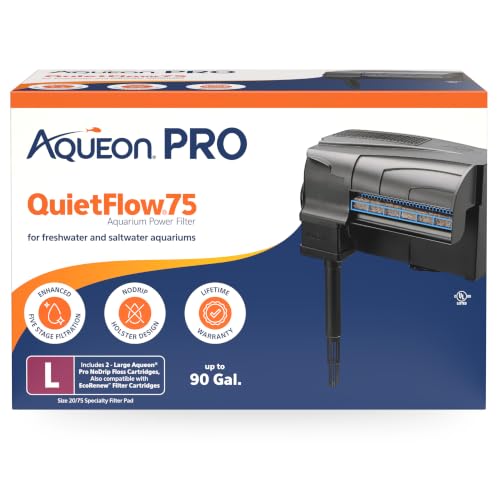
POWERFUL 5-STAGE FILTRATION SYSTEM: Dense floss for particles, carbon to remove toxins and odors, Bio-Holster and Bio-Media grid for biological filtration. Specialty pad for customized filtration.

WITH BIO-WHEEL TECHNOLOGY: BIO-Wheel technology provides wet/dry biological filtration.

Practical Steps to Start Your 75-Gallon Aquarium
To start your 75-gallon aquarium properly, you need to measure the tank’s dimensions—length, width, and height. These measurements allow you to estimate the total volume and plan for water capacity accurately. Subtract the space occupied by substrate, decor, and equipment from this total volume to find the usable water capacity. Keep the waterline below the rim to prevent spills and ensure proper circulation. Use this net capacity for fish stocking calculations instead of the tank’s total gallon rating, which can be misleading. When selecting fish, consider their size and body shape—slender or heavy-bodied—and choose species that fit comfortably within the available space. Smaller species and schooling fish typically allow for more stock, but always aim for a balanced mix to maintain water quality. Proper filtration and regular water testing are essential, especially if you plan to breed fish, so ensure your setup provides adequate circulation and monitoring to keep water quality high. Additionally, choosing a small aquarium with filter ensures a healthier environment and simplifies maintenance. Regularly cleaning and maintaining your setup also helps prevent issues with water quality, promoting a thriving aquatic environment. Incorporating appropriate aquarium plants can further enhance water quality and provide natural hiding spots for your fish.

PERFORMANCE – Max. Flow 300GPH (1140L/H), Max lift 4.5ft (1.35m), Power 12W. This fish filter is ideal for fish tank size of 70-100 gallons(Choose the right filter for your tank). A filter can’t cover tanks of big differences in capacity (as claimed by some products online)! Follow our recommendations for your tank.
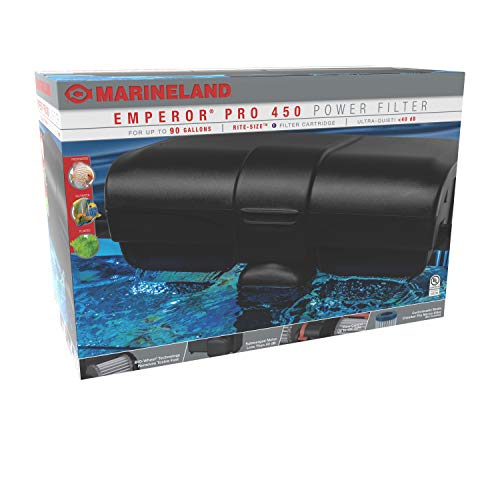
WITH BIO-WHEEL TECHNOLOGY: BIO-Wheel technology provides wet/dry biological filtration.

【Efficient Filtration Capabilities】 The PondForse canister filter utilizes multiple layers of filtration media to remove particles and impurities from the aquarium water. This comprehensive approach to water filtration helps maintain crystal-clear water and a healthy ecosystem for your aquatic pets.
How Decorations and Filtration Affect Fish Capacity
Decorations and filtration greatly influence how many fish your 75-gallon tank can safely hold. Decorations typically take up about 10 to 35 percent of the tank’s volume, which reduces the water space available for swimming. Dense decorations provide hiding spots for shy or territorial fish but can hinder water circulation and lessen filtration effectiveness. Poorly arranged decor may create stagnant zones, leading to waste buildup and degraded water quality. Additionally, choosing the right aquarium filter media can optimize filtration efficiency and help maintain a healthy environment. Properly designed filtration systems support water quality by removing harmful toxins, ensuring your fish thrive in a clean and balanced habitat. Regularly adjusting your aquarium setup helps prevent these issues and promotes a more stable aquatic environment.

DEPENDABLE FIT FOR FLUVAL FILTERS: Compatible with Fluval filter models 106, 206, 306, 406, FX5, 105, 205, 305, 405, 104, 204, 304, and 404 for confident media changes

Powerful Filtration for Up to 75 Gallons: Ideal for both freshwater & saltwater tanks, our fish tank canister filters provide a 265GPH flow rate for efficient water circulation & crystal-clear water

Indicator Light Reminder: It works by detecting that water starts to overflow around the filter chamber due to the cartridge being clogged and the LED indicator light will turn on to remind you to replace filter pads
Common Stocking Mistakes to Avoid in Your 75-Gallon Tank
Overloading your 75-gallon tank based solely on fish count is a common mistake. Instead, you should focus on the bioload, which accounts for the waste the fish produce relative to the tank’s filtration capacity. Overloading quickly without allowing the biofilter to establish and adapt causes ammonia and nitrite levels to spike, risking fish health and tank stability. A good rule of thumb is to introduce fish gradually, giving your biofilter time to process waste effectively. Remember that adult sizes and growth potential matter—adding smaller fish that will grow larger can lead to overcrowding as they mature. Proper planning around social groups and compatibility is also crucial, as overcrowded or incompatible species can cause stress, aggression, and disease. Additionally, providing suitable aquarium furniture** can help create hiding spots and territories that promote healthier behavior. It’s equally important to maintain water quality through regular testing and partial water changes, as poor water conditions can quickly undermine your efforts regardless of fish number. Being mindful of the aquarium’s filtration capacity** ensures your tank remains a healthy environment for your fish.

【PACKAGE CONTENTS】:Main Filter Unit, U-V Light, Rich Filter Media Set (Reusable Activated Carbon, Reusable Ceramic Balls, Reusable Filter Sponge, Reusable 2× Filter Socks), Nice Packaging Box

【Efficient Filtration Capabilities】 The PondForse canister filter utilizes multiple layers of filtration media to remove particles and impurities from the aquarium water. This comprehensive approach to water filtration helps maintain crystal-clear water and a healthy ecosystem for your aquatic pets.

【Dedicated Large U-V Chamber】Large, isolated chamber Maximizes Light-to-Water Contact, isolated from bio-sponge to Protect Beneficial Bac-teria.The 5w 253.7nm wavelength U-V Light can clean 99% green or grown, make the Odor Yellow Green aquatic tank clean and clear
Monitoring Water Quality for a Healthy Aquarium
You should check your aquarium’s water quality at least once a week once the tank has stabilized. During the initial setup and for the first few weeks, daily testing of key parameters such as ammonia, nitrite, nitrate, pH, and temperature is essential to ensure everything remains within safe ranges. Monitoring frequently helps catch fluctuations early, preventing potential health issues for your fish.
After stabilization, weekly testing generally suffices unless you notice signs of stress, participate in adding new fish, or are treating diseases. More frequent checks—perhaps every few days—are advisable during these times to maintain optimal water conditions. Using reliable tools like liquid test kits or digital meters ensures accuracy. Regular testing allows you to quickly spot and correct problems like rising ammonia or nitrite levels, which can be deadly if left unchecked. Maintaining appropriate nitrate levels below 20 ppm, zero ammonia and nitrite, and stable pH suited to your fish species promotes a healthy, thriving aquarium environment.
Tips for Increasing Fish Numbers as Your Tank Ages
As your aquarium ages, increasing fish numbers should be a gradual process. Start by adding small, compatible species in light increments of 10 to 20 percent every three to four months. This slow approach allows biological filtration to adjust, preventing ammonia spikes and maintaining water stability. Proper aquarium lighting enhances plant growth, which in turn supports the overall health of your fish by improving oxygen levels and reducing waste buildup. Good fish nutrition reduces waste production and strengthens fish resilience, making them better equipped to handle increased bioload. As you add more fish, ensure your filtration system is upgraded or supplemented with larger or secondary filters to handle the increased waste. Water changes should be increased to about 40 to 50 percent weekly, and regular substrate cleaning becomes essential to remove accumulated detritus. Monitoring nitrite levels weekly is critical to verifying water quality and preventing toxic conditions. Choosing peaceful, schooling fish maximizes space utilization, and maintaining consistent, ideal tank conditions allows your 75-gallon aquarium to support a vibrant, dense community over time. Additionally, understanding the importance of biological filtration helps you manage the nitrogen cycle effectively, ensuring a stable and healthy environment as your fish population grows.