Wondering how to vacuum gravel in your fish tank without disturbing your setup? You’ll want to use a siphon and take it slow to lift debris while keeping your beneficial bacteria safe.
With the right technique, you can make tank cleaning quick and effective. Keep reading to learn the simple steps for a safe, thorough gravel vacuuming session.
Why Gravel Vacuuming Is Important for Aquarium Health
Regular gravel vacuuming is crucial for maintaining a healthy aquarium. It removes debris, uneaten food, and waste, preventing their decay into harmful substances like ammonia, nitrite, and nitrate. These toxins can increase the bio-load, stressing your fish and deteriorating water quality. Vacuuming also helps keep the substrate clean and free of debris, enhancing the visual appeal of your tank. Leftover food and waste can settle in gravel, breaking down and releasing toxins that harm aquatic life. Consistent cleaning promotes better fish behavior by reducing stress caused by dirty water and excess waste. Partial vacuuming, which leaves some beneficial bacteria intact, supports biological filtration—an essential process that converts waste into less harmful substances. Targeting high activity areas and around decorations prevents waste buildup in spots prone to accumulation. Regular gravel vacuuming improves water clarity, supports healthier fish, and helps maintain the long-term health of your aquarium. Additionally, understanding the beneficial bacteria present in your substrate can help you optimize your vacuuming routine to preserve biological balance and prevent tank derformation.
What Equipment Do You Need for Effective Gravel Cleaning
To effectively clean your aquarium gravel, you need specific equipment. A gravel vacuum or siphon is essential and should have flow control features to prevent pulling in too much gravel. Choose a vacuum head size that matches your tank’s needs: wider for standard gravel and narrower for planted or crowded tanks. You’ll also need a collection bucket to hold the dirty water and a second container for rinsed gravel. A strainer or colander helps rinse debris from the substrate efficiently. Regular water testing is important to monitor water quality and ensure safe conditions after cleaning. During maintenance, turn off and unplug your filter to prevent damage or debris from being drawn into it. Additionally, a hose for rinsing the gravel and gloves for handling the substrate contribute to a safer, more effective cleaning process. Incorporating proper maintenance techniques can extend the lifespan of your aquarium setup and keep your fish healthy, especially when using appropriate tools designed for delicate or dense substrates. Proper gravel cleaning methods can significantly reduce the buildup of harmful waste products in your tank, making regular maintenance more manageable.

FUNCTION --- Easy to control, convenient to siphon fish faeces, impurities, turbid water out of fish tank.
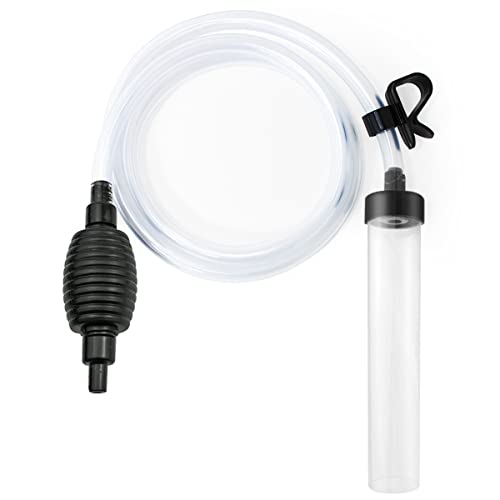
FUNCTION --- Easy to control, convenient to siphon fish faeces, impurities, turbid water out of fish tank.
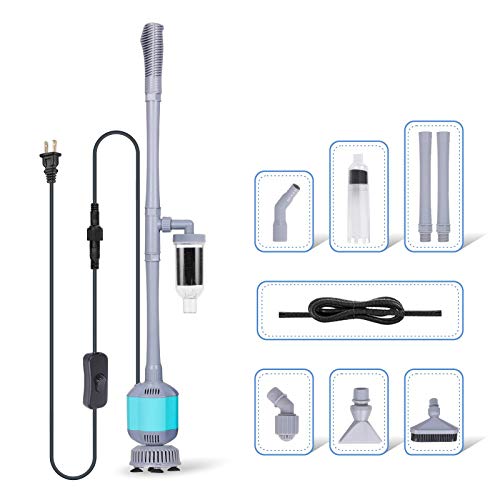
CLEANING FUNCTION: Our sand cleaner have four spliced rigid tubes, which can be extended from 11.4 inches to 40.5 inches according to the tank. With brush heads, each corner of the fish tank can be cleaned. Aquarium gravel cleaner can also be used with the duckbill suction port to suck dirt from the corner of the fish tank, and the dung can be easily sucked away
How to Set Up and Start Your Gravel Vacuum Safely
Before starting to vacuum your gravel, ensure all equipment is properly prepared to avoid accidents or damage. Turn off aquarium heaters and filters to prevent unintended equipment operation or damage. Check that all gravel vacuum components are tightly secured, especially on electric models, to prevent leaks or breakage during use. Place the collection bucket lower than the tank to use gravity siphoning effectively. Position the hose end securely, possibly with a clamp, to prevent slipping during operation. Inspect the surrounding area for obstacles or tangled cords that could cause tripping or disrupt your work. For manual priming, fully submerge the tube, hold it at a slight diagonal, and lift it above the tank to start the siphon, keeping the opening underwater to maintain water flow. When using an electric vacuum, confirm all connections are secure and start by vacuuming a small area. Keep the intake gently angled to minimize disturbance to the aquarium decor and fish behavior. Proper gravel preparation ensures a smoother vacuuming process and minimizes stress for your aquatic inhabitants. Additionally, ensuring proper water flow allows for more efficient cleaning and helps maintain healthy water quality. It’s also beneficial to regularly check your equipment for any signs of wear or malfunction to keep your cleaning routine safe and effective.
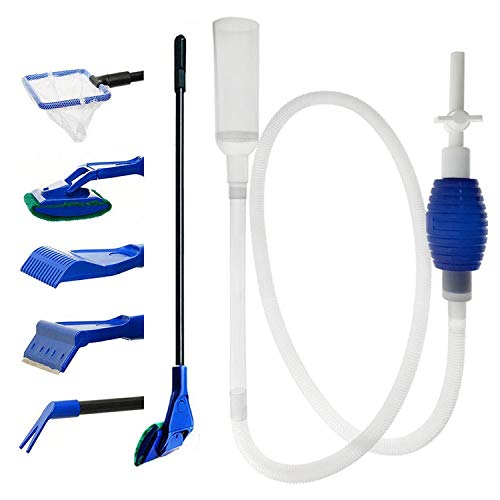
PREMIUM MATERIALS: Crafted from durable, high-quality materials, this aquarium cleaning kit is built to last and withstand frequent use for reliable fish tank maintenance.
![QZQ Aquarium Gravel Cleaner [2026 Edition] Vacuum Fish Tank Vacuum Cleaner Tools for Aquarium Water Changer with Aquarium Thermometers Fish Net kit Use for Fish Tank Cleaning Gravel and Sand](https://m.media-amazon.com/images/I/51S+2N20RtL._SL500_.jpg)
Mufti-functional cleaning kit: Aquarium gravel vacuum cleaner kit is a mufti-functional aquarium cleaner that uses (adopts)the siphon design principle, which includes the aquarium, aquarium sand washing, algae scraping, fish excrement cleaning, aquarium residual debris, and aquarium water changing. Quick water change gives fish (provides)a clean and comfortable aquarium living environment.

6 in 1 Functional Aquarium Cleaner: AQQA aquarium gravel cleaner kit can effectively achieve ①Water changing/②Sand washing/③Debris cleaning/④Scrub the fish tank/⑤Water filter/⑥Water cycle. Make your aquarium cleaning more quickly and conveniently.
Step-by-Step Guide to Vacuuming Gravel in Your Aquarium
Begin by setting up your siphon correctly. Place your bucket lower than the tank to utilize gravity for suction. Connect one end of the vacuum hose into the tank and the other end into the bucket. Lower the vacuum head at a slight angle to prevent air trapping and fill the tube with tank water to prime the siphon. During cleaning, insert the vacuum head straight into the gravelly substrate and lift slightly to draw up debris. Use slow, controlled back-and-forth motions, keeping the head slightly buried to maximize algae removal without pulling too much gravel. Work systematically by dividing the tank into sections and moving gently to avoid disturbing the substrate. Incorporate proper plant placement to help maintain a thriving environment during your cleaning routine. Consider the size of your substrate and gravel depth to ensure effective cleaning and avoid unnecessary disturbance. Keep an eye on the water parameters, as regular cleaning supports a healthy aquatic environment. Stop once you have cleaned enough or reached your water change target, then remove the siphon and refill the tank with treated water. Be mindful of common mistakes, such as removing too much water or debris at once, which can upset the balance of beneficial bacteria and harm plants.

Perfect for Regular Water Changes: No messy drips, and a sturdy one way valve to improve suction. You can clear 30L in about 5 minutes with our aquarium siphon

FUNCTION --- Easy to control, convenient to siphon fish faeces, impurities, turbid water out of fish tank.

【Quick Water Change】Only two valves and a long hose are needed to quickly complete the water change of the fish tank, and use the pressure of tap water to drain water. This semi-automatic water changer is suitable for medium and large fish tanks.
How Often Should You Vacuum Your Aquarium Gravel?
Vacuum your aquarium gravel at least once a week if your tank is heavily stocked or has lots of messy eaters. This frequency helps control algae growth, prevents debris buildup, and maintains water quality. For tanks that are lightly stocked and have stable water conditions, vacuuming every two to four weeks is usually sufficient. Keep an eye on fish behavior; stressed or finicky fish may require more frequent cleaning. If you notice cloudy water, foul odors, or visible debris sinking into the substrate, it’s a clear sign to increase your vacuuming schedule. Regular gravel vacuuming during water changes ensures waste stays under control, promoting healthy fish and reducing unwanted algae. Incorporating beneficial aquarium plants can also help absorb excess nutrients and improve water clarity. Adjust your routine based on your specific tank conditions to keep your aquatic environment optimal.
Targeting Dirty Areas and Hard-to-Reach Spots
To effectively target dirty areas and hard-to-reach spots in your aquarium, start by removing decorations that block access or trap debris. This makes your vacuuming safer for your pets and easier to perform. Use a narrow tube or an adjustable-flow vacuum to reach corners, behind plants, and beneath or behind decorations with weaker water flow. Focus on high-waste zones such as feeding spots and tank edges, where debris tends to accumulate quickly. When vacuuming, keep the suction shallow—about half an inch—to lift waste without disturbing the gravel or uprooting plants, especially around roots. Work in sections, moving slowly with controlled motions. To reposition the vacuum, pinch or crimp the hose to pause the suction, preventing unnecessary gravel disturbance and protecting your aquatic inhabitants. Checking for best aquarium with sump options can also help maintain overall water quality and reduce debris buildup. Additionally, using a suitable gravel vacuum designed for your tank size can improve cleaning efficiency and reduce stress on your fish. Ensuring proper gravel depth can also make vacuuming more effective and easier to perform.
How to Avoid Disrupting Beneficial Bacteria During Cleaning
To avoid disrupting beneficial bacteria during cleaning, limit your gravel vacuuming to about one-third of the substrate per session. Use a gravel vacuum inserted only about 0.5 to 1 inch deep and move slowly in short pulses. This gentle technique prevents churning the entire bed and minimizes disturbance to established bacteria colonies. Keep your equipment off during cleaning and restart it carefully afterward to maintain a stable biofilter environment. When refilling the tank, add dechlorinated water slowly and match the temperature to reduce shock and substrate disturbance. Working in sections and avoiding deep, large-scale disruptions helps protect beneficial bacteria, reduce fish stress, and promote a balanced, healthy aquarium. Regular maintenance and proper tank cleaning techniques are essential for a thriving fish habitat.
Common Problems When Vacuuming Aquarium Gravel and How to Fix Them
Vacuuming gravel can sometimes cause common issues, but they are easily fixable. If your siphon won’t start, ensure the hose is properly primed. Fill the hose with tank water and seal both ends before placing it in the tank, or use a priming bulb to initiate flow. When too much suction pulls gravel into the hose, lift the tube slightly or pinch the hose to reduce the flow. Debris trapped under decorations or in corners often requires moving ornaments and cleaning these sections separately. Over-draining can occur if you remove too much water at once, so monitor water levels closely and opt for smaller containers during each pass. To minimize disturbance near plant roots, use gentle, shallow passes over the substrate. Additionally, regular maintenance routines that control algae and debris buildup on plants and decorations can make future cleanings smoother and less disruptive. Understanding the aquarium substrate material can also help in selecting appropriate cleaning methods to avoid disturbing the environment. Recognizing the algae growth, causes, and preventive techniques can contribute significantly to maintaining a healthy, clear tank.
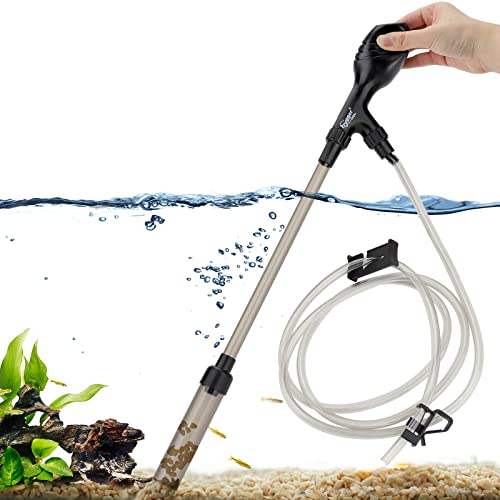
80GPH GRAVEL WASHING: Equipped with aquarium gravel vacuum washing tube. 80GPH water flow, suitable for gravel cleaning in small fish tanks, also there is flow regulating clamp to control the water outlet flow. And with built-in filter baffle to block small fish and gravel to be sucked out

4 in 1 Vacuum Cleaner: SEAOURA mini manual aquarium gravel vacuum cleaner offers 4 essential functions: gravel wash, scraping stain, suck manure and adjustable water flow. Using siphon principles, it quickly improves water quality, creating a clean and comfortable tank for your fish

Versatile Cleaning Kit: Our aquarium gravel vacuum cleaner kit is a multi-functional solution for all your aquarium maintenance needs. It utilizes the siphon design principle to perform essential tasks such as aquarium cleaning, sand washing, algae scraping, fish excrement removal, debris elimination, and water changes. Equipped with three independent cleaning heads, our kit allows you to effortlessly tackle various tasks with ease.
How to Change Water Safely During Gravel Cleaning
To change water safely during gravel cleaning, start by preparing all necessary equipment beforehand to avoid accidents or stressing your fish. Gather a gravel vacuum, a clean bucket, dechlorinator, and any water conditioners needed to match your tank’s water chemistry. Ensure the replacement water is within ±1°F of your tank temperature to prevent thermal shock. Check that the pH and hardness levels of the new water are compatible with your tank’s conditions. Turn off electrical devices like heaters and filters to prevent damage, and disconnect power strips for safety.
Pre-mix and aerate saltwater if you’re performing a saltwater change, following the instructions carefully to ensure correct salinity levels. Add dechlorinator to the fresh water, mixing thoroughly to neutralize chlorine and chloramines. When siphoning, start gently to avoid disturbing the gravel excessively. Keep the tube tip shallow in the gravel to prevent removing beneficial bacteria that live there. Proper preparation and attention to detail help maintain a healthy environment for your fish while making the water change process safer and more effective. Properly preparing equipment and water parameters ensures a successful and safe water change for aquatic life.
Best Practices for Gravel Cleaning in Different Aquarium Types
For freshwater community tanks, it is best to remove no more than one-third of the substrate during each gravel cleaning session. This helps avoid stressing the fish and disrupting their behavior. Focus on cleaning high-waste zones, such as feeding areas and underneath decorations, where debris tends to accumulate the most. Using a gravel vacuum, gently suck up detritus from these areas while keeping the rest of the substrate relatively undisturbed. This selective approach maintains biological stability and promotes a healthy environment for your aquarium inhabitants. Additionally, understanding habitat maintenance can help you develop a more effective cleaning routine that supports your tank’s overall health.
【Quick Water Change】Only two valves and a long hose are needed to quickly complete the water change of the fish tank, and use the pressure of tap water to drain water....