
Thinking about getting a 55-gallon tank and wondering how big it really is? It’s a substantial size, measuring roughly 48 inches long, 13 inches wide, and around 20 to 21 inches high.
When filled, it holds about 48 to 50 gallons of water, which makes it a serious investment.
Want to know how to fit and support this hefty setup safely? Keep reading for all the details you need to make an informed choice.
What Are the Dimensions of a Standard 55-Gallon Aquarium?
A standard 55-gallon aquarium generally measures about 48 inches in length, 13 inches in width, and 20 to 21 inches in height. These dimensions create a long, narrow tank, making them popular for home aquariums. Keep in mind that actual sizes can vary slightly between brands—some models may measure around 48.25 x 12.75 x 21 inches. The inside dimensions are slightly smaller due to the thickness of the glass, typically around 47.25 inches long, 11.63 inches wide, and 20.63 inches high. Additionally, tank dimensions are important to consider when planning your aquascape and choosing suitable equipment. When planning for accessories or maintenance, it’s advisable to leave space around the tank. Adding about 4 to 5 inches on each side allows enough room for filters, cords, and routine upkeep. Proper clearance helps ensure you can access all parts of the tank comfortably and maintain a safe environment for your fish. Proper planning of tank space can help prevent overcrowding and promote a healthy aquatic ecosystem.
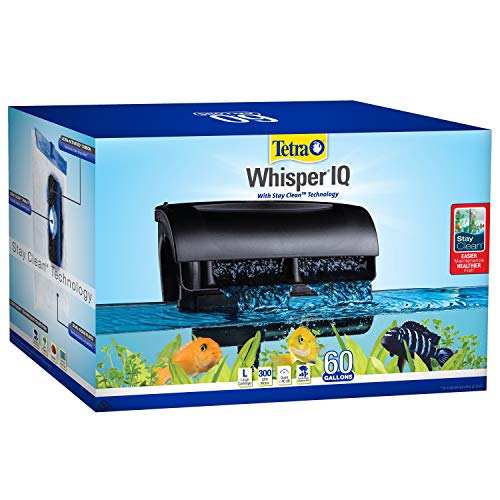
QUIET AQUARIUM FILTER: The Tetra Whisper IQ Power Filter with Stay Clean technology contains a sound shield for quiet filtration less than 40 dB.

WITH BIO-WHEEL TECHNOLOGY: BIO-Wheel technology provides wet/dry biological filtration.
How Much Water Does a 55-Gallon Tank Hold?
A 55-gallon tank typically holds about 48.75 gallons of usable water, which is roughly 10 to 15 percent less than the nominal capacity. This variation occurs due to factors such as glass thickness, internal space, and decorations that displace water. When filling your tank, expect to measure slightly less water than the label indicates, which is important for accurately planning stocking levels and filtration needs. Additionally, understanding tank volume can help you better assess your aquatic environment requirements. To ensure proper filtration and oxygen exchange, it’s crucial to account for effective water capacity when setting up your aquarium. Converting to liters, the actual water capacity ranges from approximately 195 to 208 liters, depending on how the tank is set up. Knowing the precise volume helps ensure your aquatic environment remains healthy and well-maintained.
How Heavy Is a Filled 55-Gallon Aquarium?
A filled 55-gallon aquarium can weigh around 600 pounds or more. This weight results from the combined mass of water, substrate, decorations, and equipment inside the tank. While an empty glass tank typically weighs about 78 pounds, the total weight increases significantly once filled. This substantial load requires a sturdy stand and strong flooring to support it safely. The Water weight includes only water, excluding other materials, but it is the primary contributor to the overall weight. Handling or moving a filled tank without proper support is impractical and risky. The heavy weight also affects aquarium stability and fish compatibility, as certain species need specific habitat conditions and a stable environment. Planning for a secure foundation and adequate support is essential to prevent accidents and ensure the safety of your aquatic setup. Proper weight distribution is crucial to maintain balance and prevent structural damage over time. Additionally, understanding the total weight helps in assessing whether existing furniture or flooring can handle the load. Being aware of the total weight helps you maintain a safe, secure, and long-lasting aquarium.
What Space Do You Need for a 55-Gallon Tank at Home?
You need at least 4 feet of space in length, a little over 1 foot in width, and 20 inches in height to accommodate a 55-gallon tank comfortably. Allowing an extra 4 to 5 inches beyond the tank’s dimensions is essential for maintenance, lighting, and filtration access. This ensures you have enough room to perform tasks easily without feeling cramped. Additionally, leave 2 to 4 inches behind the tank for hoses, cables, and plumbing connections. Make sure there is sufficient vertical clearance to lift lids and clean the tank without difficulty. The weight of a filled tank can reach up to 700 pounds, so a sturdy, level surface is crucial. When selecting a location, consider nearby furniture or ceilings that might restrict access or limit your ability to work comfortably around the tank. The floor must support the tank’s weight, which can reach up to 700 pounds when filled, making floor support a critical factor in placement. Confirm the chosen spot can handle this load, preferably with a sturdy, level surface. Ensuring proper tank placement can help prevent accidents and make routine maintenance safer and more convenient. Adequate space for essential equipment, such as lighting, water filters, and air pumps, is also necessary to ensure your tank remains accessible and well-maintained.

Large Capacity Support: Designed for 55-75 gallon aquariums, this heavy duty fish tank stand features a spacious 51.3" L x 19.7" W top panel with a weight capacity of up to 850 lbs. The sturdy surface provides a reliable foundation for your aquarium while creating an impressive centerpiece for your living room, office, or hobby space

Large-Capacity Aquarium Stand: The 52.0"L x 19.7"W top easily holds a 55-75 gallon aquarium and most standard fish tanks. The 23.6"L x 18.9"W bottom is perfect for a 10-20 gallon small tank or reptile/amphibian enclosure, creating an orderly aquatic space

850LBS HEAVY-DUTY SUPPORT: Built with a durable metal frame and reinforced structure, this 55-75 gallon aquarium stand supports up to 850 lbs, providing a stable and secure base for large fish tanks. The unique circle frame design adds structural support while creating a stylish centerpiece for your aquarium setup
How Does a 55-Gallon Tank Compare to Other Sizes?
A 55-gallon tank is significantly larger than small starter tanks and provides more stability for your aquatic environment. It offers about 22 times the water capacity of tanks ranging from 2.5 to 10 gallons, which helps create a more balanced ecosystem and enhances the visual appeal. Smaller tanks like 5.5 or 10 gallons support only a few small fish, while a 55-gallon tank allows you to keep larger schools or more active species, promoting a lively and natural setting. Intermediate tanks between 15 and 40 gallons are easier to manage but don’t offer the space needed for bigger or more diverse fish populations that a 55-gallon tank can support. Larger tanks, such as those from 60 to 125 gallons, provide even more volume but also require substantially more space and stronger structural support. Understanding tank dimensions and capacity helps you choose the right size for your space and needs. Additionally, proper tank size plays a crucial role in maintaining water quality and reducing maintenance efforts. Recognizing average fish size can guide you in selecting the appropriate tank capacity for your fish community. Overall, a 55-gallon tank offers a practical balance between size and capacity, making it an ideal choice for creating a healthy, visually engaging aquarium.

COMPLETE GLASS AQUARIUM KIT*: The kit includes a 55-gallon glass tank with two hinged hoods for easy access, white LED lights, a Tetra Whisper PF60 Power Filter with two Tetra Large Bio-Bag Filter Cartridges, a 200-watt Tetra heater, a thermometer, a fish net, a Tetra AquaSafe water conditioner sample, a TetraCare brochure and an aquarium set-up brochure.

COMPLETE GLASS AQUARIUM KIT: The kit includes a 55-gallon glass tank with two hinged hoods for easy access, white LED lights, a Tetra Whisper PF60 Power Filter with two Tetra Large Bio-Bag Filter Cartridges, a 200-watt Tetra heater, a thermometer, a fish net, a Tetra AquaSafe water conditioner sample, a TetraCare brochure and an aquarium set-up brochure.
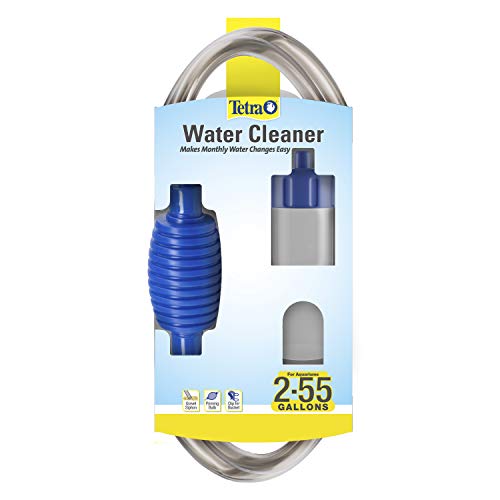
TETRA WATER CLEANER: Gravel siphon used to easily clean aquariums.
What Are the Different Shapes and Sizes of 55-Gallon Tanks?
There are several shapes and sizes of 55-gallon tanks to suit different space and aesthetic preferences. The standard tank is rectangular, but options like breeder-style, corner, column, and vertical cylindrical designs are popular. Breeder tanks are wider, measuring around 36 inches by 18 inches by 21 inches, which offers more horizontal swimming space for fish. Corner tanks fit into room corners with dimensions such as 38 inches by 27 inches by 22 inches, helping you maximize floor space. Column tanks emphasize vertical height, often reaching 30 inches or more, and typically have square footprints like 24 inches by 24 inches by 24 inches. Vertical cylindrical tanks, usually about 20 inches in diameter and 47 inches tall, use less floor space while extending upward. These diverse tank shapes provide options for different room layouts and display styles.
What Factors Affect the Actual Capacity and Size?
Numerous factors affect the actual capacity and size of a 55-gallon tank beyond its nominal volume, making it important to consider real-world conditions. Tank maintenance activities like cleaning and inspecting for leaks can alter internal dimensions over time, thereby reducing usable space. Water chemistry adjustments, such as pH modifications or the addition of specific additives, may require slightly different fill levels to maintain safety and stability for aquatic life. The tank’s wall thickness, usually about one-quarter of an inch, also reduces the internal volume compared to the external dimensions. Substrate, décor, and equipment occupy space within the tank, displacing water and decreasing the overall capacity. Additionally, tanks are rarely filled to the rim to allow room for water expansion and to provide safety margins. Temperature changes can cause thermal expansion and contraction, subtly affecting the water volume over time. Proper tank measurements can help you more accurately determine capacity and avoid overstocking. Accurate measurements are essential for understanding the water volume and ensuring optimal conditions for your aquatic inhabitants. Understanding the actual capacity of a tank can help prevent overstocking and ensure a healthy environment for your aquatic inhabitants. By understanding these factors, you can more accurately gauge the true capacity of your aquarium and plan accordingly.
Is Your Stand Strong Enough for a 55-Gallon Aquarium?
Ensuring your stand can support a 55-gallon aquarium requires considering its weight capacity. When filled, a 55-gallon tank weighs approximately 600 pounds, including water, substrate, decorations, and equipment. Household furniture often isn’t designed to hold this much weight, risking structural failure. A proper stand should have a weight capacity comfortably above your total expected load, ideally in the range of 660 to 750 pounds. Look for stands with sturdy vertical supports, reinforced braces, and even weight distribution to prevent wobbling or flexing. Make sure the stand is level, matches your tank’s footprint exactly, and shows no signs of instability. The Black Fish Tank Stand is rated to support up to 990 pounds, providing extra margin of safety and ensuring longevity for your aquarium setup. Additionally, choosing a stand with proper support can help prevent accidents and safeguard your investment. Proper weight distribution also reduces stress on the stand, enhancing its durability over time.

5-in-1 Power Outlets: The 55 gallon aquarium stand comes integrated with 3 AC and 2 USB outlets, optimally catering to all your aquarium & reptile device power needs

【Robust & Durable Construction】Crafted with steel crossbars and reinforced wood panels, this stand boasts a weight capacity of up to 1000 lbs. Its sleek dimensions—49" L x 19" W x 31.7" H—are tailored to optimize vertical space, making it an ideal fit for 55-75 gallon main tanks.
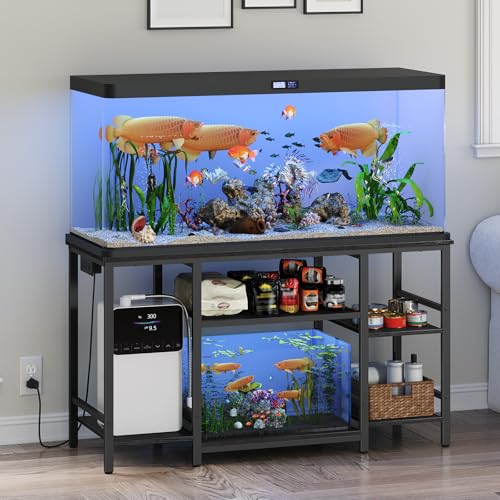
Large-Capacity Aquarium Stand: The 52.0"L x 19.7"W top easily holds a 55-75 gallon aquarium and most standard fish tanks. The 23.6"L x 18.9"W bottom is perfect for a 10-20 gallon small tank or reptile/amphibian enclosure, creating an orderly aquatic space
Where Is the Best Place to Put Your 55-Gallon Aquarium?
The best place to put your 55-gallon aquarium is on a ground floor or a concrete slab in the basement where the weight—over 600 pounds—can be supported safely. Ensure it rests on a level, sturdy surface such as load-bearing walls or supported flooring. Avoid placing the tank on upper floors unless a structural engineer confirms that the supporting surface can handle the load, especially in older homes with less reinforced flooring. Choose an area away from household traffic, pets, and children to prevent vibrations, bumps, or accidental knocks that could disturb the tank. Keep it out of direct sunlight to avoid unwanted algae growth and temperature fluctuations. Position it near electrical outlets for easy access to filtration, lighting, and equipment, but avoid outlets directly beneath the tank to prevent water damage or electrical hazards. Leave open space around the tank for maintenance access, and use shims if needed to ensure it remains perfectly level, which is crucial for stability and safety. Proper placement not only protects the structural integrity of your home but also promotes optimal lighting and water filtration for your aquarium.
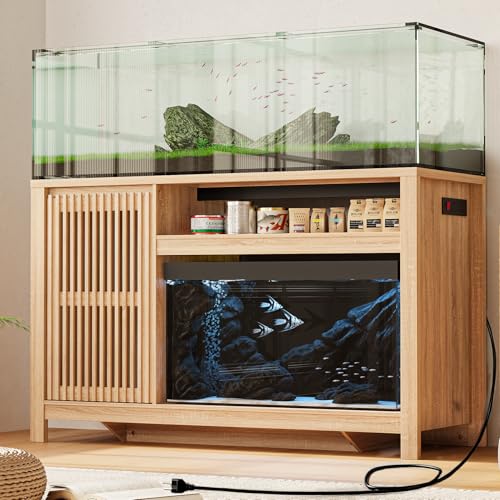
Integrated Power Strip with Individual Switches for Easy Access: This aquarium stand comes equipped with a built-in power strip featuring a master switch and individual controls for each outlet. Manage your fish tank accessories like filters, pumps, and lights with utmost convenience and safety. This cabinet for fish tank accessories storage helps keep cords organized and simplifies your aquarium maintenance routine.(WARM REGARDS: THE AQUARIUM ITSELF IS NOT INCLUDED).
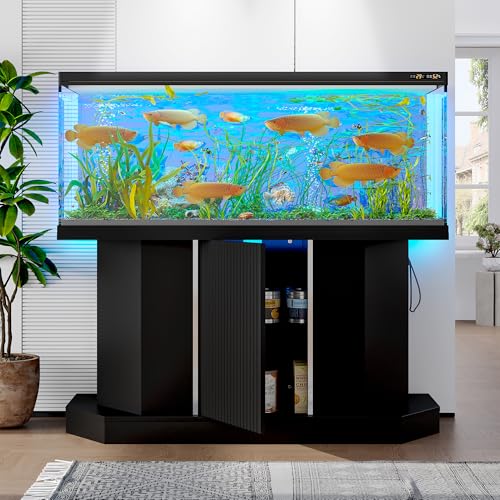
⭐️【Perfect Fit for 55 - 75 Gallon Tanks】:This heavy-duty aquarium stand is engineered to securely support 55 gallon and 75 gallon fish tanks, with an impressive 880 lbs weight capacity. The spacious desktop (47.64" x 14.17") provides a perfect foundation for your aquarium setup.

Power Outlet and USB Charging Port: This farmhouse aquarium stand features a built-in power strip with 2 outlets and 2 USB ports for charging and use. The charging port and outlet design make the aquarium stand neat and easy to manage