
Figuring out whether a canister filter or a HOB (hang-on-back) filter works best depends on your tank size and how much biological activity it needs to handle.
Generally, HOB filters are simple and affordable for small tanks.
While canisters are better suited for larger or heavily stocked setups.
Want to find out which option fits your aquarium best? Keep reading for all the details.
What’s the Best Filter for Your Aquarium Size and Setup?
For aquariums under 50 gallons, Hang-On-Back (HOB) filters are usually the best choice. They are simple to maintain, cost-effective, and fit well with small to medium setups. HOB filters are easy to install and take up minimal space outside the tank, maintaining a clean, unobtrusive look that enhances your aquariums’ aesthetics. They provide adequate filtration for these smaller tanks, promoting a healthy environment for your fish and plants. As tank size increases beyond 50 gallons, canister filters become more suitable. They offer larger media capacity and better filtration efficiency, which is essential for handling heavier bioloads. Canister filters generally have longer intervals between cleanings and are more customizable, making them ideal for heavily stocked tanks or species that produce a lot of waste, like goldfish and cichlids. Your choice should balance visual appeal with filtration capacity tailored to your tank’s size and bioload needs.

WITH ROTATING BIO-WHEEL: Patented Bio-Wheel technology provides excellent wet/dry biological filtration.

Aquarium filtration system that offers superior contact time with filter media and energy efficient pump lowers operating costs

With bio-wheel technology: bio-wheel technology provides wet/dry biological filtration.
Key Factors to Consider When Choosing a Filter (Tank Size, Bioload, Budget)
Choosing the right filter depends heavily on your tank size, bioload, and budget. For tanks under 75 gallons that have plants or basic lighting, a Hang-On-Back (HOB) filter is usually enough. They are affordable upfront, simple to maintain, and provide adequate mechanical and biological filtration for smaller setups.
For larger tanks, especially over 50 gallons, or tanks with high waste output from messy fish like cichlids or goldfish, a canister filter is a better choice. Canisters hold more media, offering superior biological filtration and longer intervals between cleaning. They handle heavy bioloads more effectively than HOB filters but come with a higher initial cost and more involved maintenance.
Your budget and willingness to perform maintenance should guide whether you opt for a budget-friendly HOB or a more efficient canister filter. Additionally, filtration capacity is a critical factor, as it determines how well your filter can handle the waste produced in your specific setup. Ensuring the filter’s capacity matches your tank’s needs will promote water balance and a healthier environment for your aquatic life. Ultimately, balancing tank size and waste production with your maintenance capacity ensures healthy fish and thriving plants.
How Do Canister and HOB Filters Differ in Filtration Power?
Canister filters generally provide greater filtration power than HOB filters, especially for larger or heavily stocked tanks. They have larger media chambers, which support more biological and chemical filtration. This allows beneficial bacteria to thrive and process waste effectively over time. Enhanced media capacity enables canisters to sustain larger colonies of beneficial bacteria, promoting a more stable environment. The pressurized water flow through multiple stages of media results in more thorough filtration compared to the single-stage flow typical in HOB filters. Additionally, canisters often achieve higher flow rates, which promote stronger circulation throughout the aquarium. This not only improves water quality but also helps distribute heat and oxygen evenly. Because of their design, canister filters can maintain consistent water turnover even as the media clogs, ensuring your tank remains clean longer without frequent maintenance. In contrast, HOB filters, with their smaller media chambers, are better suited for small to medium tanks but might struggle with the demands of larger or heavily stocked aquariums in terms of chemical filtration capacity and flow rate. Furthermore, the efficiency of biological filtration in canisters is enhanced by media capacity, which supports a larger bacteria colony essential for maintaining a healthy aquatic environment. In addition, the multi-stage filtration process in canisters allows for customizable media choices, enhancing overall filtration performance.

FILTRATION PRINCIPLE: After power on, the built-in pump generates power to form a filtered water cycle. First, dirty water is sucked in from the bottom of the water inlet pipe, and a small amount of water with an oil film enters from the oil skimmer port. The dirty water flows to the filter box, passes through three filter media, completes the filtration cycle,then clean water flows out of the outlet pipe

Easy Bottom Drain: Instead of lifting heavy buckets or siphoning manually, just press the drain valve once of Veehoo canister filter. Waste and old water exit directly from the bottom, leaving your tank cleaner in seconds. No spills, no stress.Your weekly water change drops from 30 minutes to 5 minutes

【Efficient Filtration Capabilities】 The PondForse canister filter utilizes multiple layers of filtration media to remove particles and impurities from the aquarium water. This comprehensive approach to water filtration helps maintain crystal-clear water and a healthy ecosystem for your aquatic pets.
What’s Your Budget? Comparing Costs and Long-Term Value
Budget considerations are crucial when choosing between HOB and canister filters. HOB filters are generally inexpensive, costing around $20 to $30, making them suitable for small tanks or when you’re working within a tight budget. Canister filters start at approximately $100 and can go over $300, but they offer benefits like longer filter lifespans and higher capacities for larger or more demanding setups.
Installation is also a factor. HOB filters are simple to set up and require minimal effort, often just hanging onto the tank’s edge. Canister filters, on the other hand, tend to be more complex, involving more steps and time to install properly. Although canisters are more costly upfront, they usually provide better long-term value because of their durability and ability to scale as your tank grows.
Your choice hinges on weighing immediate affordability against future needs. If you have a small tank or limited budget, a HOB filter may be the practical choice. But if you plan to expand your setup or want a longer-lasting, higher-capacity system, investing in a canister filter could pay off in the long run.

Fluval eTEC (Efficient Technology) construction employs cutting-edge design, materials & manufacturing methods to deliver powerful pump performance, reduced energy consumption and ultra-quiet operation

【Efficient Filtration Capabilities】 The PondForse canister filter utilizes multiple layers of filtration media to remove particles and impurities from the aquarium water. This comprehensive approach to water filtration helps maintain crystal-clear water and a healthy ecosystem for your aquatic pets.

HOW IT WORKS? – Dirty water is pulled up through the inlet tube into the filter, while a small portion of floating oils being sucked into tank filter by surface skimmer. The water flows through multiple stages of filtration which traps debris and particles. Ultimately, clean water returns to the tank via the spray bar / directional spout / flared spout
How Noisy Are These Filters, and What About Maintenance?
Canister filters are the quietest option, producing around 30 dB, which is nearly soundless. Their motors and bodies sit outside the tank, minimizing noise. They often include insulated housing to further reduce operational sounds. A noise-reduction feature can significantly impact the overall sound levels of the filter. Hang-On-Back (HOB) filters tend to be louder, generating 26 to 40 dB due to water splashing back into the tank. Sponge filters are also very quiet but can produce bubbling sounds from the air pump. Additionally, noise levels can vary depending on the filter’s design and placement, so choosing the right model can help keep your pond peaceful. Regular maintenance of these filters is crucial because filter efficiency drops if debris build-up occurs, affecting both noise levels and performance. Regarding maintenance, HOB filters are easier to clean since they allow quick access, and media can be replaced weekly with minimal effort. Canister filters require more involved maintenance—disconnecting hoses, cleaning multiple chambers, and reassembling parts—which can be time-consuming. Regular upkeep is essential for smooth operation and minimal noise disruption.
Matching the Right Filter to Your Aquarium’s Specific Needs
Matching the right filter to your aquarium’s specific needs depends on your tank’s size, bioload, and setup goals. For tanks up to 75 gallons, a hang-on-back (HOB) filter typically suffices and is easier to maintain. Larger tanks of 50 gallons or more, especially those that are overstocked or have high bioloads, benefit from a canister filter because of its higher capacity and greater media volume.
Water flow and filtration are critical for algae prevention, which can be influenced by your lighting setup. Canister filters offer more control over flow rates, making them suitable for delicate or low-flow species like bettas. Both filter types provide biological, mechanical, and chemical filtration, but with canisters, you get more options for customization and settings adjustment. Proper water parameter stability is essential for the health of your aquatic life and is closely tied to effective filtration. Additionally, understanding the specific filtration needs of your chosen species can greatly impact your selection.
Your choice should be guided by your tank size, the species you keep, and your goal of maintaining a thriving, algae-resistant environment. Selecting the appropriate filter type helps ensure your aquatic ecosystem remains healthy, clear, and balanced.
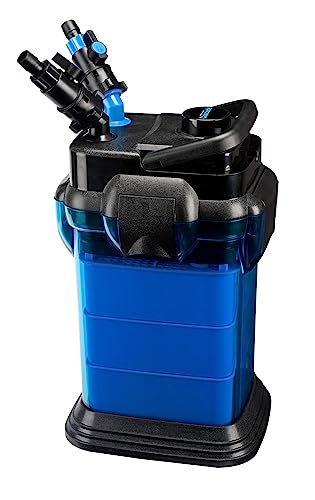
Sparkling Water Made Simple - This Aquarium canister filter delivers 265 GPH to maintain clear, circulating water in tanks up to 100 gallons. Ideal for freshwater, saltwater, and turtle habitats, it supports consistent movement throughout the tank while operating with smooth, reliable performance.

One More Replacement Bulb & Complimentary Filter Medias: There are 2 bulbs come with this filter, which can effectively turn green water tank into crystal clear, improving the water quality. One more bulb is equipped with this filter that longer service life is ensured and the bulb can be timely replaced once the assembled one broken. Complimentary filter sponges and bio balls also speed up purifying the water.

Powerful Steady Output: Power:35W, Max Water Flow:581GPH, the energy-efficient motor operates with excellent stability, providing a continuous and reliable power source for the filtration process, and reducing electricity consumption while delivering powerful filtration performance.
How to Install and Maintain Your Aquarium Filters Easily
Proper installation and regular maintenance of your aquarium filters are crucial for a healthy, clear tank. To ensure effective natural filtration and water circulation, position your canister filter below the aquarium. This setup allows gravity to assist siphon flow, making start-up smoother and maintenance easier. Make sure the filter fits comfortably inside the stand with enough space for removal during cleaning. Additionally, a properly positioned filter helps prevent water leaks and ensures consistent flow, reducing the risk of equipment failure. Keep hoses as straight and short as possible to prevent flow restrictions and maintain optimal water movement. Before loading the filter media, rinse all components in dechlorinated water to remove any dust or debris that could cloud your tank or clog the filter. Assemble all parts beforehand, including filter baskets, lids, clamps, intake, and output tubes, to streamline setup. During installation, prime the filter using its built-in priming button or plunger. This step helps initiate siphoning and quickly gets your filtration running. Always double-check all seals and valves to ensure they are secure to avoid leaks or loss of prime. Regularly inspecting water parameters and overall performance will help ensure your filter remains effective and your aquarium stays healthy. After setup, perform regular maintenance: clean mechanical media once a month to remove debris, and replace chemical media as recommended to sustain water quality and filtration efficiency.

Maintenance kit for the Fluval FX5 and FX6 High Performance Canister Filter
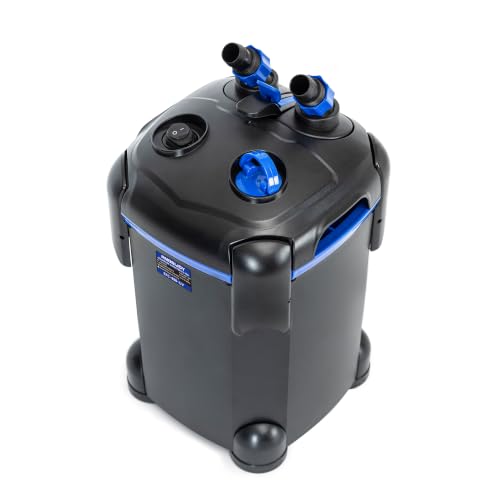
One More Replacement Bulb & Complimentary Filter Medias: There are 2 bulbs come with this filter, which can effectively turn green water tank into crystal clear, improving the water quality. One more bulb is equipped with this filter that longer service life is ensured and the bulb can be timely replaced once the assembled one broken. Complimentary filter sponges and bio balls also speed up purifying the water.

Multi-stage filter with the patented Smart Pump advanced microchip technology, which can effectively turn water tank into crystal clear, improving the water quality. Complimentary filter sponges and bio balls also speed up purifying the water.
Deciding Between Canister and HOB Filters: Final Tips
A canister filter is generally better suited for tanks of 50 gallons or more, especially if you have a heavy bioload. Canisters offer greater filtration capacity because of their large media chambers, allowing you to customize media types for biological, mechanical, and chemical filtration. This makes them ideal for larger tanks or heavily stocked setups where maintaining water quality is more challenging. They tend to operate more quietly over time and require less frequent maintenance, as their larger chambers can hold more media, extending the interval between cleanings. Additionally, canister filters are often preferred for their multifunctionality, making them suitable for complex aquatic environments.
In contrast, hang-on-back filters are typically better for smaller tanks with lighter bioloads, usually under 50 gallons. They are easier to install and require less time and effort for maintenance, often needing cleaning every couple of weeks. HOB filters tend to be more budget-friendly initially and can be a good choice for beginners. However, they often need more frequent cleaning to prevent clogging and maintain water flow, especially in tanks with higher waste production. When choosing between the two, consider your tank size, desired ease of maintenance, and how much biological filtering capacity your setup requires. Additionally, filtration requirements play a key role in selecting the most suitable option for your aquarium.
FAQs: Common Questions About Aquarium Filters
Both canister and HOB filters can handle mechanical, biological, and chemical filtration, but their features differ. Canister filters generally offer more capacity for filter media and higher water flow rates, making them suitable for larger or heavily stocked tanks. They tend to run quieter and may require less frequent cleaning, although they can be more complex to set up and maintain. HOB filters are easier to install, clean, and tend to be more affordable, making them ideal for smaller tanks, especially those under 50 gallons. They provide gentler water flow and are simpler for beginners to operate. Additionally, canister filters support diverse media options, allowing for customized filtration setups tailored to specific tank needs. Your choice should consider your tank size, the level of stocking, maintenance preferences, and filtration needs, balancing cost, ease of use, and water flow requirements.