
Thinking about adding plants to your aquarium but unsure where to start? There are many types, from floating to rooted, each with their own care needs and appearance. Some are easy options for beginners, while others help control algae and create a natural look.
Keep reading to discover how to choose and care for the perfect aquatic plants for your tank.
What Are Aquarium Plants and Why They Matter
Aquarium plants are vital for maintaining a healthy aquatic environment. They absorb nutrients such as nitrates, ammonia, and phosphates from the water, which helps control algae growth and keeps the water quality stable. During photosynthesis, these plants consume carbon dioxide and release oxygen, supporting fish respiration and overall tank health. They naturally filter the water, stabilize pH levels, and reduce toxins, making the environment safer for your aquatic life. Additionally, aquarium plants provide shelter and hiding spots for shy or young fish, fry, and spawning activities. Proper selection and care of plants can also enhance the aesthetic appeal of your aquarium water chemistry stability, actively contributing to the tank’s chemical balance and creating a more natural, balanced ecosystem for your fish. Maintaining healthy plant growth also promotes a healthy aquatic environment, which benefits all inhabitants of your tank.
How to Choose the Right Plants for Your Aquarium Goals
To choose the right plants for your aquarium, start by evaluating your tank’s conditions and your desired aesthetic and functionality. Match plants to your tank size, lighting setup, CO₂ supplementation, and water chemistry to ensure they thrive. Determine their placement zones—background, midground, foreground, floating, or epiphytes—to create depth and visual interest. Select species based on their care requirements: hardy plants like Java fern or Anubias are perfect for beginners, whereas carpeting plants need stronger lighting and stable conditions. Consider how each plant aligns with your aquascaping style and the variety you want to introduce. Additionally, pay attention to growth rate, trimming needs, and compatibility with your equipment to keep your plants healthy and manageable without extra effort. Monitoring water parameters regularly is essential, as maintaining proper water conditions directly affects plant health and growth. Understanding the environmental preferences for each species helps you optimize their chances of thriving in your setup. It’s also helpful to research the plant’s biological needs, which ensures you create the ideal environment for their development.
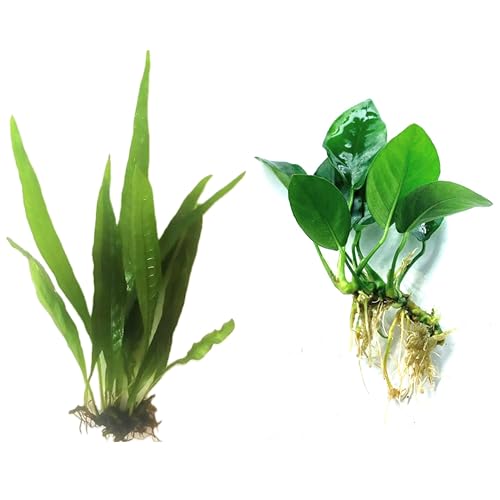
IMPORTANT: Please note that during times of extreme weather, live plants will can suffer due to extreme temps. During winter, do not order live plants when temperatures are expected to go below 30F at the lowest point during the day.

LIVE AQUARIUM PLANT - 1 Java Fern Plant (Microsorum Pteropus)
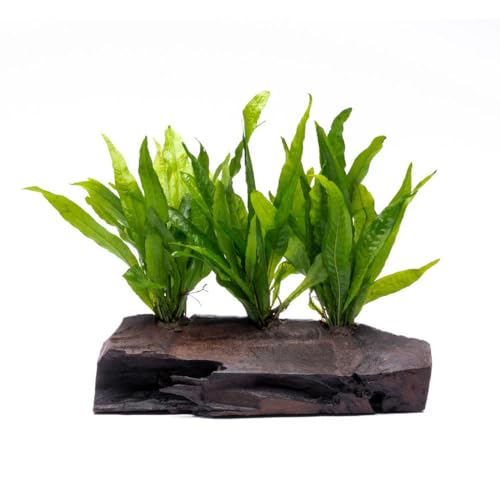
Live aquarium plants attached to driftwood, stone, or mats, will instantly create a great looking and natural appearance for your tank.
Understanding Different Types of Aquarium Plants
Understanding the different growth forms of aquarium plants helps you choose the right ones for your setup. Leaf arrangement varies widely: rosette plants develop leaves in a tight, circular pattern, making them ideal for midground or background spots. Sword-type plants grow broad, elongated leaves that provide striking vertical accents and can reach several inches in height. Growth speed also differs; stem plants tend to grow quickly, allowing you to fill empty space in a short time and propagate easily through trimming and replanting. Floating plants, which are unrooted, spread rapidly across the water surface, providing shade and helping absorb excess nutrients. Rhizome plants like Java fern and Anubias grow slowly, with leaves emerging from horizontal rhizomes often attached to rocks or wood. Recognizing these growth habits makes it easier to select plants that suit your aquascaping goals. Additionally, understanding plant growth forms can help you optimize lighting and nutrient requirements for a healthier aquarium. Different plant growth habits also influence maintenance practices, making it essential to choose varieties that match your care routine and expertise. Being aware of the growth rate can help you plan your planting schedule and manage your aquarium more effectively.

Bold Green to Bronze Foliage – Lagenandra keralensis adds vibrant contrast to planted tanks with its striking color.

Elegant Rosette Shape – Barclaya longifolia grows with soft, flowing red, green, and mauve-toned leaves.

Amazon Rosette - Aquatic Plant Species
Best Low-Light and Easy-Care Plants for Beginners
Choosing the right low-light plants for your aquarium can simplify maintenance and enhance your aquascape. Epiphytes like Java Fern, Anubias, and mosses are excellent options because they attach easily to rocks or wood and require no special lighting or substrate. These plants grow slowly, reducing the frequency of pruning, and they help hide equipment to create a more natural look. Their slow growth rate makes them particularly forgiving for beginners, which adds to their suitability for low-maintenance setups. Additionally, low-light plant adaptation allows these species to thrive without needing intense lighting, making them ideal for beginners. Low-light rooted plants such as Cryptocoryne and Amazon sword perform best when supplemented with nutrient-rich substrate and grow at a gradual pace. Their slower growth means less frequent trimming, making them ideal for beginners. Fast-growing plants like Hornwort and Guppy grass help control excess nutrients and prevent algae buildup by absorbing nutrients quickly. Floating plants, including duckweed, are excellent beginner picks because they add shade, improve fish health, and do not need to be planted—simply let them float on the water surface. Their ease of setup and maintenance makes them perfect for low-light conditions. Recognizing aquarium water quality parameters can help you keep your plants healthy and your ecosystem balanced, ultimately making your planted aquarium more manageable and enjoyable for newcomers.

Echinodorus bleheri from South America is undemanding and beautiful, and becomes 20-50 cm tall.

WHAT YOU GET - 1x Water Sprite (Ceratopteris thalictroides). Every plant is greenhouse-grown in our Texas facility and inspected before shipping.

WHAT YOU GET - An assorted mixed bundle of live aquarium plants. Every plant is greenhouse-grown in our Texas facility and inspected before shipping.
Creating a Layout: Placement Tips for a Natural Look
To create a natural-looking aquarium layout, focus on layering plants to mimic their growth in nature. Begin by placing taller plants in the background, such as species that reach the top of the tank, to add height and depth. Midground plants should be of medium height, positioned to fill the middle space naturally. Short plants belong in the foreground, providing a sense of perspective. Incorporate a gentle slope in the substrate, rising toward the back of the tank, which enhances dimension and makes plants stand out more effectively. Ensuring proper aquascape design techniques helps achieve a balanced and harmonious setup.
Arranging plants in irregular clusters rather than straight lines, grouping similar species together to imitate natural plant distribution, also promotes a more authentic Aquascape. Position taller stems or dense clusters in the rear corners to maintain visibility of the fish swimming in the center of the tank. Use the rule of thirds to place focal points off-center, anchoring them with rocks or driftwood set at slight angles to avoid a manufactured look. Mixing textures and contrasting plant types adds visual interest, making the scene feel more authentic and lively. Knowing how to layer plants effectively helps create a more realistic and balanced aquascape. Additionally, selecting plants suited to your lighting conditions ensures they thrive and contribute to the overall natural aesthetic.
How to Care for and Propagate Your Aquarium Plants
Maintaining proper water parameters is essential for healthy aquarium plant growth. Keep your water pH between 6.5 and 7.5 to mimic natural freshwater conditions. Nitrates should stay below 10 ppm, and phosphates under 0.5 ppm to prevent algae overgrowth. Regular testing using reliable kits helps you monitor these levels accurately. Consistent lighting is critical; provide full-spectrum light for 8 to 10 hours daily to support photosynthesis. Regular fertilization with complete liquid nutrients and root tabs supplies vital nutrients that may not be available from water alone. Pruning is vital; remove dead or decaying leaves and trim tall stems to promote bushier growth and improve light penetration. For propagation, cut stem plants at the top and replant the cuttings to encourage new growth. Divide large bunches before planting to improve water circulation and light availability, which expedites establishment. Ensure the plant crowns stay above the substrate to avoid decay and facilitate faster root development. Additionally, adequate carbon dioxide levels can significantly boost plant health and growth.
Common Problems and How to Troubleshoot Aquarium Plants
Aquarium plants can face a range of issues that affect their health and growth, but many problems stem from imbalances in nutrients, lighting, or water chemistry. Nutrient deficiencies like nitrogen, potassium, and iron cause symptoms such as yellowing leaves, leaf pinholes, or chlorosis. To address these deficiencies, use targeted fertilization based on water testing results and regularly monitor water parameters. Poor water chemistry can stress plants, leading to decline or algae overgrowth; maintaining stable pH, KH, and GH levels helps create a healthy environment. Ensuring consistent CO2 levels and proper surface agitation promotes optimal gas exchange and CO2 availability for plants. Lighting issues, including insufficient intensity or mismatched spectrum, hinder plant growth; gradually increasing light strength and adjusting photoperiods can improve plant health. Correcting these problems involves making step-by-step adjustments and observing plant response, avoiding sudden changes that can cause additional stress. Monitoring water parameters regularly allows for early detection of imbalances and prevents larger issues from developing over time. Additionally, understanding plant nutrient requirements helps tailor care strategies, promoting vigorous growth and resilience. Regular testing of water chemistry provides crucial data that guides effective adjustments. Maintaining awareness of aquatic plant physiology can further enhance growth outcomes by aligning care with their specific biological needs.
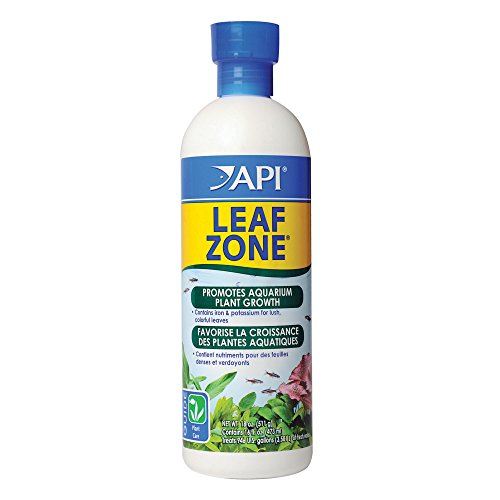
Contains one (1) API LEAF ZONE Freshwater Aquarium Plant Fertilizer 16-Ounce Bottle

GROWTH TREATMENT: Seachem Flourish Tabs are growth stimulating tablets for plant roots which contain essential trace elements, amino acids, and vitamins.

Comprehensive supplement for the planted aquarium
Using Floating and Carpet Plants to Enhance Your Tank
Using Floating plants cover about 40–60% of the water surface, which helps balance light filtration and nutrient absorption. This coverage provides natural shade that reduces intense top lighting, benefiting fish and plants that are sensitive to high light levels. Regular thinning of floating plants prevents excessive shading, ensuring submerged plants receive enough light for healthy growth. Floating plants also absorb excess nutrients like nitrates, functioning as natural filters that promote water clarity and stability. By competing for nutrients, they help limit algae blooms and improve overall water quality. Additionally, floating plants create shelter zones offering hiding spots for fry, small fish, and microfauna, while bubble-nesting fish can use them for spawning sites. Their presence adds habitat complexity, encouraging diverse aquatic life within your tank. Floating plants can also help reduce temperature fluctuations by shading the water, aiding in temperature regulation in outdoor setups. Proper management of nutrient levels in your tank is essential to maintain a healthy aquatic ecosystem. Incorporating aquarium plant diversity can further enhance the stability and aesthetic appeal of your tank environment. Maintaining an appropriate balance of light and nutrients ensures that your aquarium remains healthy and vibrant.

3-FOOT PLASTIC BAMBOO PLANT: Realistic plant ideal for aquariums and terrariums.
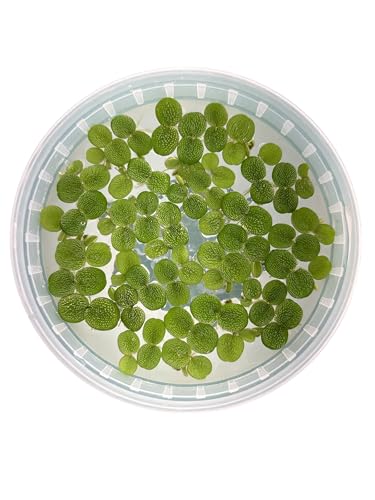
Unique Floating Plants: Salvinia Minima, commonly known as Water Spangles, are fascinating live aquarium plants that float on the water surface.

【You Will Receive】5 pcs floating plant corral, 5 different sizes, Suitable for different types of aquatic plants and different sizes of aquariums.
Integrating Houseplants to Boost Water Quality and Aesthetics
Integrating houseplants into your aquatic setup can significantly improve both water quality and visual appeal. In emergent filtration, you grow plants with roots submerged in water while their foliage remains above the surface. These plants act as natural barriers, directly absorbing nutrients such as ammonium and nitrate from the water. This nutrient uptake helps prevent excess buildup, which reduces algae growth and lessens the frequency of water changes needed. Most house plants require foliage above water with roots hanging in water for nutrient absorption. Popular choices like pothos, philodendron, peace lilies, spider plants, and lucky bamboo are especially effective at nutrient absorption. They also add visual interest above the tank, creating a lush, natural scene similar to a paludarium. To ensure healthy growth and optimal filtration, rinse the roots thoroughly before placing the plants in the water, and provide adequate lighting. Properly set up, these plants contribute to a more stable aquatic environment while enhancing the overall aesthetic.