
Thinking about starting a reef tank can feel overwhelming, but getting it right from the beginning helps ensure a beautiful, thriving underwater world.
You’ll need a good-sized, sturdy tank with the right filtration, quality salt mix, and clean water to get started.
By understanding key steps like cycling, adding live rock, and maintaining stable water parameters, you’ll set yourself up for success.
The full details are right below.
What Equipment Do You Need to Set Up a Reef Tank?
You need a sturdy, level aquarium that is appropriately sized for your planned livestock and aquascaping style. The stand must support the full weight of water, rock, and equipment without wobbling or tipping. Before filling with saltwater, perform a leak test with freshwater to ensure your setup is secure and free of leaks. Proper filtration is essential; this typically includes a protein skimmer to remove organic waste and biological media like ceramic rings or bio-balls to support beneficial bacteria. Circulation devices such as powerheads and wavemakers create strong, variable water flow, which is crucial for coral health and nutrient distribution. For lighting, choose reef-capable LED systems that offer full-spectrum output and customizable timers. These lights help simulate natural sunlight patterns, promoting healthy coral growth. Maintaining a stable temperature with an appropriate heater and regularly monitoring all parameters will create an ideal environment for your marine life. Regular equipment maintenance is also vital to prevent malfunctions that could harm your tank’s inhabitants. Additionally, investing in reliable testing kits ensures you can accurately track parameters like salinity, pH, and calcium levels to keep your reef healthy. Proper water quality management is fundamental to sustaining a thriving reef ecosystem.

High-Efficiency Aquarium Protein Skimmer – Powerful protein skimmer for aquarium generates dense micro-bubbles to quickly remove organic waste, proteins, and impurities from saltwater, reef, and marine fish tanks, keeping water crystal clear and healthy for your fish and corals.

Effectively removes dissolved organics from saltwater

In-sump protein skimmer for aquariums up to 150 gallons
How to Prepare Water and Salt Mix for Your Reef Aquarium
To prepare water and salt mix for your reef aquarium, start with about 50 gallons of high-quality water like RO/DI. Using this pure water prevents impurities or unwanted minerals that could hinder protein skimming and promote algae growth. Select a clean, food-grade container, filling it with your target volume first. Slowly add salt—about 1/2 cup per gallon or according to your brand’s instructions—while stirring continuously with a powerhead or pump. This ensures complete dissolution and prevents clumping. Aerate the water during mixing to increase oxygen levels. Heat the mixture to approximately 78°F; sometimes starting cold helps certain elements dissolve more effectively. After mixing, test the salinity with a refractometer, aiming for around 35 PPT or 1.025 specific gravity. Let the water age for several hours to achieve stability before using it for water changes. Having properly prepared water supports optimal protein skimming and algae control in your reef system. Proper mixing and measurement are essential to ensure your reef tank maintains stable parameters and promotes healthy coral and fish growth.

Coral pro salt is the ideal salt mix for reef aquariums, encouraging accelerated, healthy growth and enhanced vitality of all corals
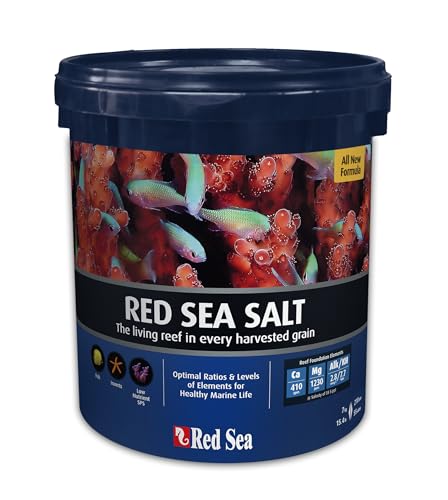
The Sea Salt Mix Is Excellent For Mature Reef And Low Nutrient Systems

FORMULATED SPECIFICALLY FOR REEF AQUARIUMS: Contains essential ocean reef elements in concentrations greater than those found in natural sea water
How to Achieve Ideal Water Quality and Parameters Before Adding Fish and Corals
Maintaining optimal water quality before adding fish and corals is critical. Ensure stable temperature between 75–79°F, salinity at 1.025–1.026 specific gravity, and pH levels from 8.1 to 8.3. Regularly monitor these parameters because small daily fluctuations matter more than hitting exact numbers. Confirm that ammonia and nitrite levels are undetectable and keep nitrate between 3 and 10 ppm to prevent algae growth. Calcium should be around 400 ppm, alkalinity at 8 dKH, and magnesium at approximately 1300 ppm to support coral health. Control nutrients like phosphate to low but measurable levels to avoid encouraging unwanted algae. Additionally, optimize your lighting system to meet coral needs and implement pest control measures to prevent infestations. Ensuring these conditions are met creates a healthy environment for your new livestock. Regular testing and understanding of water parameters is essential for maintaining a stable aquatic ecosystem. Paying attention to water chemistry can greatly influence your tank’s success. Understanding how water quality impacts coral growth can help you make informed adjustments as needed.
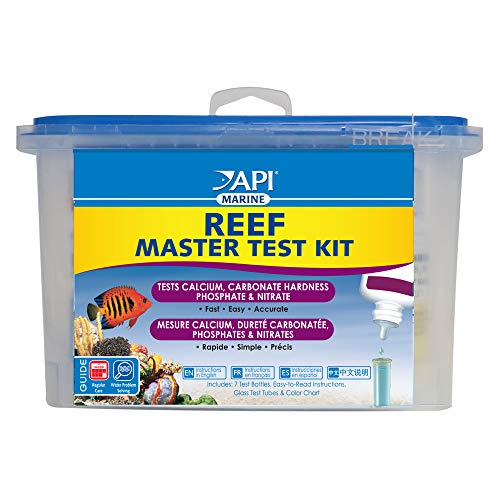
Contains one (1) API REEF MASTER TEST KIT Reef Aquarium Water Test Kit 1-Count, including 7 bottle of testing solution, 2 color cards and 4 test tubes with cap

𝗛𝗼𝗺𝗲 𝗔𝗾𝘂𝗮𝗿𝗶𝘂𝗺 𝗪𝗮𝘁𝗲𝗿 𝗧𝗲𝘀𝘁 𝗞𝗶𝘁 - Ensure the health of your fish with aquarium water testing kit & ammonia test strips for fish tank. This complete freshwater & saltwater tank test kit provides a reliable water tester for ammonia, pH, iron, chlorine, total hardness (GH), carbonate, nitrate, nitrite, total alkalinity, copper, and temperature, allowing you to have a complete understanding of your aquarium water quality. Trusted by fish enthusiasts, it adapts to your needs, making it an essential tool for aquarium care.

Contains one (1) API FRESHWATER MASTER TEST KIT 800-Test Freshwater Aquarium Water Master Test Kit, including 7 bottles of testing solutions, 1 color card and 4 tubes with cap
Which Filtration and Circulation Devices Support Reef Health?
Filtration and circulation devices are essential for a healthy reef environment because they help maintain water quality, promote proper flow, and support nutrient control. Sumps with return pumps increase overall water volume, which helps dilute toxins and stabilize parameters, while also providing space to hide equipment and manage nutrients effectively. Properly sized return pumps ensure water flow is strong enough to prevent stagnation without creating excessive noise or heat, protecting sensitive marine life. The use of live bacteria in biological filtration supports the beneficial nitrogen cycle, helping to break down waste products and maintain a stable, odor-free environment. Additionally, adequate flow distribution ensures even circulation throughout the tank, preventing dead spots where debris can accumulate. Creating optimal flow patterns is essential to mimic natural reef currents and promote a healthy environment. Powerheads and wavemakers are crucial for creating turbulence that mimics natural reef currents. This turbulence improves gas exchange at the water surface and enhances nutrient delivery to corals and other aquatic organisms. Adjustable and magnet-mounted powerheads allow you to target flow around rock formations and coral structures, preventing dead zones where circulation is poor or over-concentrated flow that could cause damage. Implementing proper placement of devices can further optimize current flow and filtration efficiency. Protein skimmers are vital because they remove dissolved organic compounds from the water before they break down into nutrients that could fuel algae growth. Efficient skimming improves water clarity and reduces nutrient levels, especially when paired with mechanical filtration such as filter socks or fleece rollers. Together, these devices foster stable water conditions and prevent algae overgrowth, supporting resilient and thriving reef ecosystems.

360° FLEXIBLE HEAD: build in a 360-degree rotatable ball joint design, the wave maker can easily adjust any direction of water current to satisfy different angle needs, has helped keep tank clean by reducing dead corners
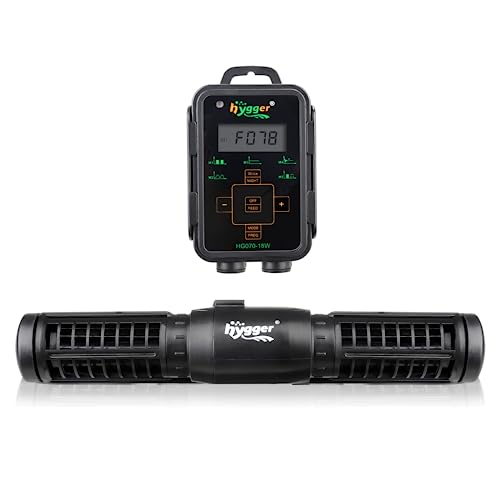
UNIQUE CROSS FLOW TECHNOLOGY - Compared to traditional wave makers, this cross flow pumps generate soft waves and the waves are spread 360 degrees. It creates a water flow similar to real ocean, activates the water in the entire tank, eliminates dead spots, and creates a beautiful fish gathering shape

hygger Wave Maker: The wave maker is made of excellent materials, pure copper motor and wear-resistant ceramic shaft to ensure ultra-quiet operation and long service life. The 6W wave pump is suitable for 20 to 100 gallons of saltwater and freshwater aquariums. Input: 100-240V 50/60Hz; Output: DC 12V/1A; Maximum flow: 1500GPH.Simulate the natural water flow of the ocean or river, providing fish and corals with a natural environment water flow experience.
How to Set Up Substrate and Live Rock for a Stable Reef Environment
To create a stable reef environment, start with a 1 to 3 inch layer of aragonite sand as your substrate. Rinsing the sand thoroughly before adding it removes dust and debris, preventing cloudiness and ensuring a marine-safe foundation. Aim for roughly one pound of sand per gallon of tank water to support healthy biological activity and natural reef processes. Carefully add the sand after partially filling the tank with water to minimize disturbance and avoid clouding the water. Incorporating the appropriate UVB lighting can enhance coral and invertebrate health, promoting a vibrant reef display. Place live rock directly on the bare bottom of the tank, starting with larger pieces to establish a stable base. Build your structures carefully, leaving open channels to ensure adequate water flow which helps prevent dead spots where detritus could accumulate. Use reef-safe epoxy or putty to secure unstable structures and prevent shifting. During live rock curing, regularly test ammonia levels. This step is vital to monitor for decay and reduce nutrient spikes, helping establish a thriving, balanced reef ecosystem. Additionally, considering the cycling process is essential to develop beneficial bacteria that sustain water quality and support marine life, contributing to the overall long-term health of your reef tank.
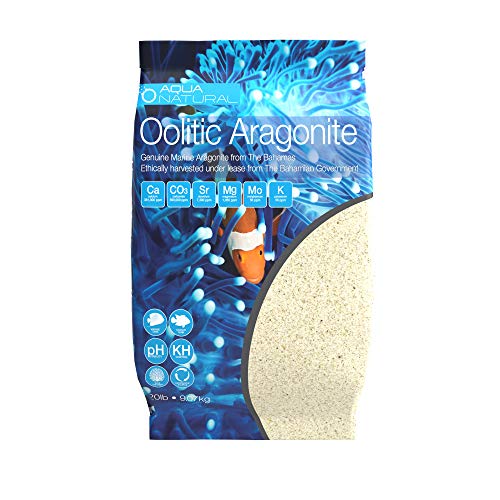
Unsurpassed buffering capability: Keeps pH at a stable 8.2 for optimal aquatic environment
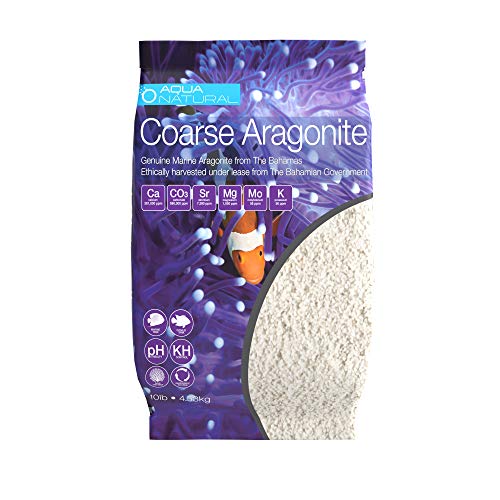
Unsurpassed buffering capability: Keeps pH at a stable 8.2 for optimal aquatic environment

Premium aragonite blend: Made from pure, natural materials with no ash, metals, pesticides, or silica—ideal for sensitive marine species and reef systems.
What Are the Best Cycling and Testing Targets for a Successful Start?
To ensure a successful cycle, you should target specific testing levels for ammonia, nitrite, nitrate, temperature, salinity, and alkalinity. Start by aiming for about 2 ppm of ammonia. Re-dose if it drops below 0.5 ppm to keep your beneficial bacteria fed and your biofilter active. Nitrite levels should fall to zero as quickly as possible, signaling that bacteria are processing waste properly. Keep an eye on nitrate levels, ideally maintaining them below 20 ppm, to promote coral and overall tank health. Maintain temperature consistently between 77 and 79°F to prevent stress, with minimal daily fluctuations. Salinity should be around 1.025 to 1.026 specific gravity, checked with a calibrated refractometer for accuracy. Alkalinity needs to stay stable in the range of 7.5 to 9.0 dKH, preventing pH swings that could harm your system. During the cycle, test ammonia every one to three days, and check alkalinity weekly. Consistent testing and monitoring is essential to identify and address issues early on, helping you prevent water parameter fluctuations. Incorporate proper water circulation to ensure even distribution of nutrients and oxygen within the tank. Light should be gentle at the start, gradually increasing intensity to avoid stressing fish and corals.
Strategies for a Smooth Reef Tank Startup: Planning, Monitoring & Troubleshooting
Careful planning, continuous monitoring, and prompt troubleshooting are key to starting a reef tank smoothly. Begin by choosing equipment appropriate for your tank size, such as return pumps and propeller pumps that promote ideal flow and ensure compatibility with your corals. Test all equipment outside the tank first to prevent potential failures once installed. During cycling, monitor ammonia, nitrite, and nitrate levels daily until these parameters stabilize, indicating a safe environment for livestock.
Regularly check salinity, temperature, alkalinity, and pH each day, making adjustments as needed to keep conditions stable. Keep an eye out for leaks, equipment failures, or algae blooms, which can signal underlying problems. When adding fish and corals, ensure fish feeding is balanced and coral growth is supported by the right flow and lighting conditions. Maintain water quality by cleaning glass and removing debris from rockwork regularly to avoid spikes in nutrients or pollutants. Proper aquascaping helps establish stable habitats for your inhabitants and can prevent issues such as dead spots and detritus buildup. Quick and effective troubleshooting minimizes setbacks, helping your reef environment thrive from the start.
How to Maintain Water Quality and Monitor Your Reef Tank Long-Term
Maintaining stable water quality long-term depends on consistent monitoring and prompt adjustments. You should regularly check key parameters such as salinity, pH, temperature, and nutrients. Use a refractometer to verify salinity, aiming for a range of 1.024 to 1.026, which supports optimal coral health. Maintain pH levels between 8.1 and 8.4 to prevent stress and promote growth. Temperature should be checked daily, with slight variations kept within 1 to 2 degrees Fahrenheit to avoid stressing your corals. Ensuring proper water parameters is essential for a healthy reef environment and can prevent a multitude of potential issues. Monitoring nutrients like ammonia and nitrite at zero is crucial, as elevated levels can be toxic. Keep nitrate below 20 parts per million and phosphate under 0.03 ppm to prevent algae proliferation and support coral nutrition. Regular testing of calcium, alkalinity, and magnesium ensures these minerals stay within the appropriate ranges for healthy stony coral development. Incorporating accurate test kits into your routine can help maintain consistency and catch imbalances early. Weekly testing of calcium, alkalinity, and magnesium, along with maintaining proper water chemistry, ensures these minerals stay within the proper ranges. Regular water changes of 10 to 20 percent every one or two weeks help remove accumulated pollutants and replenish essential elements. Proper lighting is also vital; it must match the requirements of your coral species to encourage healthy growth and minimize stress. Consistency in these practices fosters a balanced, thriving reef environment over the long term.