
Wondering how a sponge filter keeps your tank clean and healthy? It works by drawing water through its porous material.
It offers both mechanical removal of debris and biological filtration. An air pump pushes bubbles through a lift tube, creating water circulation that helps break down waste.
Keep reading to discover how to make the most of this simple yet effective filtration method.
What Is a Sponge Filter and How Does It Work?
A sponge filter is a simple yet effective device that keeps your aquarium clean and healthy. It consists of a porous foam sponge usually fitted around a central lift tube connected to an air pump. The sponge sits submerged in your tank and helps maintain clarity while blending seamlessly with your aquarium’s appearance. It functions by pulling water through its tiny pores, which creates a large surface area for beneficial bacteria to colonize. These bacteria break down harmful waste products, supporting a balanced ecosystem. The porous nature of the sponge provides ample space for biological filtration, making it highly efficient. When you turn on the air pump, it pushes air through airline tubing into the filter. This causes bubbles to rise through the lift tube, gently pulling water upward and pushing it back into the tank. This continuous, low-flow movement promotes water circulation without producing loud noise or creating strong currents. The structure of the sponge filter ensures efficient biological filtration while keeping the environment peaceful. It’s an ideal choice for small tanks or tanks with sensitive aquatic life, thanks to its quiet operation and straightforward maintenance. Additionally, biological filtration is essential for maintaining water quality and reducing harmful substances in your aquarium. Proper airflow and circulation are key factors in maximizing the filter’s effectiveness and ensuring a healthy habitat for your aquatic life.
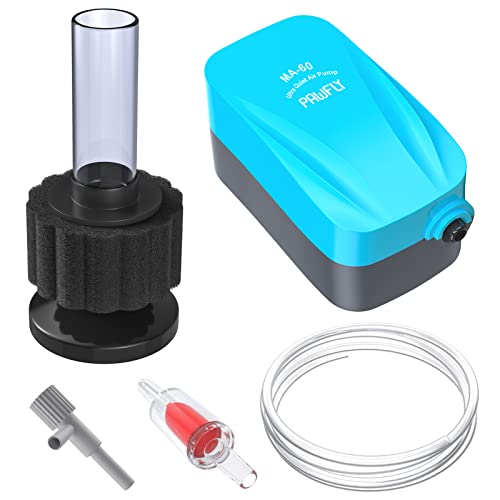
Fine Filtration Set: Driven by 40 GPH air pump, the sponge filter (1.5" D x 3" H) produces dense bubbles to increase oxygen content. Also trap and break down impurities to keep your tank crystal clear.

Easy Installation: Pass the lower column of the bracket through the pump hook, then clip the bracket on the wall of fish tank and rotate the knob to fasten the pump tightly.

Ultra-Quiet Operation: Driven by a thin piezoelectric ceramic plate, the fish tank air pump delivers gentle aeration at just 30 dB. Nearly as silent as a whisper! Perfect for bedrooms, offices, studies, and other spaces where peace matters
How Does a Sponge Filter Provide Mechanical and Biological Filtration?
A sponge filter provides both mechanical and biological filtration by actively drawing water through its porous media, which traps debris and facilitates bacterial colonization. Its pore structure acts as a physical barrier, capturing waste such as fish waste, uneaten food, and dead plant material, thereby improving water clarity. Water is pulled through the sponge primarily via airlift action, where rising bubbles create a gentle flow that pulls water into the sponge’s matrix. This ensures a consistent, low-stress flow that removes debris without disturbing delicate aquatic life. Additionally, the large surface area of the sponge encourages beneficial bacteria growth, which are essential for biological filtration. These bacteria, particularly those converting ammonia into less toxic compounds, thrive on the oxygenated surfaces of the sponge. The porous nature of the sponge also promotes oxygen exchange, supporting healthy bacterial colonies. Proper maintenance and regular cleaning of the sponge help remove excess debris while preserving these beneficial bacteria, helping to maintain optimal filtration performance without disrupting the biological cycle.
What Are the Components of a Sponge Filter and How Do You Set It Up?
A sponge filter consists mainly of a sponge or foam body, a lift tube or central tube, airline tubing, and often a weighted base. The sponge or foam provides the primary surface for biological and mechanical filtration, helping to keep the water clean and clear while blending into the aquarium environment seamlessly. The lift tube channels rising air and pulls water through the sponge, supporting ongoing filtration. Airline tubing connects the filter to an external air pump, which supplies the airflow that drives water movement and aeration. A weighted base keeps the entire filter stable and upright, preventing it from floating or tipping over. Ensuring proper installation techniques will optimize the filter’s efficiency and longevity. To set up the sponge filter, start by placing it near the substrate, ideally in a corner where water flow can circulate effectively. Connect the airline tubing to the air pump, then attach it securely to the lift tube of the filter. Ensure the bubbles rise steadily through the lift tube, indicating proper airflow. Proper assembly minimizes noise, ensures water flows smoothly, and creates a healthy environment for your aquatic life. Regular maintenance like cleaning the sponge ensures continued optimal filtration performance and helps prevent build-up of debris and bacteria.
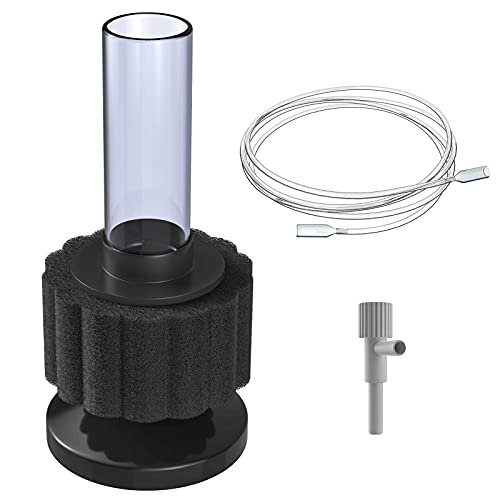
Fine Sponge Filtration: The bio sponge filter provides mechanical and biological filtration and traps debris or waste without sucking up your fish, keeping a crystal clear water tank.

Sponge filter provide both mechanical and biological filtration
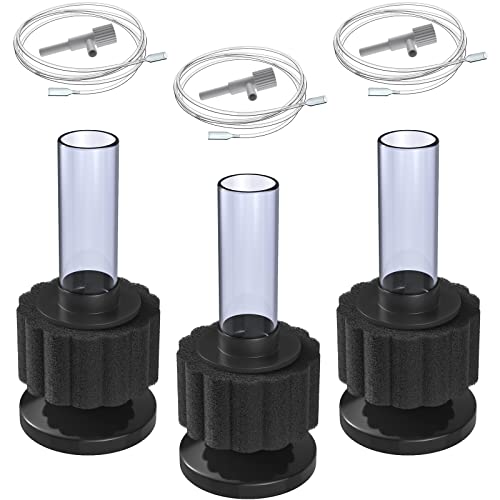
Fine Sponge Filtration: It provides mechanical and biological filtration and traps debris or waste without sucking up your fish, keeping a crystal clear water tank.
How Do You Maintain and Troubleshoot Your Sponge Filter?
To maintain and troubleshoot your sponge filter effectively, start with regular inspections to ensure it operates smoothly and keeps your aquarium healthy. Perform partial cleanings weekly, using dechlorinated or siphoned tank water, to preserve beneficial bacteria essential for biological filtration. Avoid overcleaning, as aggressive scrubbing can remove biofilm, which reduces the filter’s ability to process waste and can cloud your water or diminish clarity. Check the airflow system to verify the air pump is running and that airline tubing is free of kinks, blockages, or leaks. Inspect the intake passages and airline for debris or buildup, and clear any obstructions gently to restore proper flow. If flow rates slow down, consider replacing worn sponge media gradually, always seed new sponges with bacteria from mature media to maintain your biological filter. Keep the flow rate appropriate for your filter model to prevent under- or over-filtration. Proper water flow indicates functional filtration, and regular maintenance prevents flow issues, sustains biological health, and keeps your aquarium looking its best. Make sure to monitor filter performance regularly to catch potential issues early and ensure optimal water parameter stability. Additionally, understanding the importance of biological filtration can help you optimize your maintenance routines.

Dimension: 8x4.5cm/3.2” x1.8”, the inside hole diameter is 2cm/0.8”; for a snug fit, check the size you need carefully before placing an order. The sponge's inner diameter accommodates filter intake within 0.8-1 inches (20–25.4 mm) due to its elastic properties.

Size: S-High 4.37 inch,diameter 1.97 inch,Inner round hole diameter 0.4 inch; M-High 5.12 inch,diameter 2.36 inch,Inner round hole diameter 0.59 inch
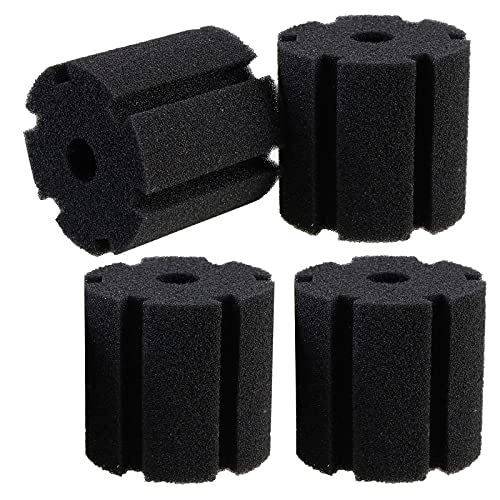
Replacement sponge for sponge filter
Troubleshooting Common Problems With Sponge Filters
If your sponge filter isn’t functioning properly, the most common issues usually involve restricted water flow or inadequate aeration. Algae buildup on the sponge or internal clogging can block water movement and decrease filtration efficiency. Regularly inspect the sponge for debris, waste, or algae, and clean or replace it if necessary. Ensure that the lift tube and outlet are free of obstructions—debris in these areas can significantly hinder performance. Noise problems often come from airline blockages, kinks, or loose fittings. Replacing damaged tubing or reseating connections typically restores proper airflow. Weak or faulty air pumps are another culprit; testing with a different pump or swapping outlets helps identify whether the pump is the issue. Also, check the sponge for wear—over time, a worn sponge offers less filtration. Proper setup and maintenance are essential to prevent common problems and ensure optimal performance. Regularly monitoring the water flow and making timely adjustments can greatly extend the life of your sponge filter and maintain a healthy environment for your aquatic life. Additionally, understanding the importance of filter media can help you choose the most effective solutions for long-term filtration success. Incorporating proper cleaning techniques can further prolong the lifespan of your sponge filter and enhance its efficiency.