Thinking about starting a reef tank but feeling overwhelmed by where to begin? A beginner-friendly setup usually involves a 40 to 75-gallon tank placed in a stable, easy-to-access spot.
The key is buying essential equipment like skimmers, filters, and flow devices gradually while ensuring you use pure water and carefully cycle your tank.
Keep reading to see how you can build a thriving reef system from scratch.
Start Your Reef Tank: Planning, Budget, and Goals
Starting your reef tank with a solid foundation involves careful planning, a realistic budget, and defined goals. The initial setup costs for equipment such as filters, heaters, and flow devices usually make up about 70 percent of your total budget. Planning for a first-year cost between $1,500 and $3,500 ensures you cover both setup and ongoing expenses. Establish your livestock goals early, as they determine the type of equipment needed and the routine maintenance required for your tank’s long-term health. Break down your purchases into phases: prioritize core support gear first, then add lighting and cleanup crews later as your tank develops. Including a reserve fund for emergencies is crucial because unexpected equipment failures can lead to significant costs. Proper planning helps your reef tank stay aesthetically pleasing and manageable as it matures. Additionally, choosing the right salt for your water conditioner is essential for maintaining optimal water quality and promoting healthy marine life. Understanding the importance of initial setup costs can help you make smarter decisions and avoid overspending early on. Being aware of potential hidden expenses, such as maintenance supplies, can further streamline your budgeting process.
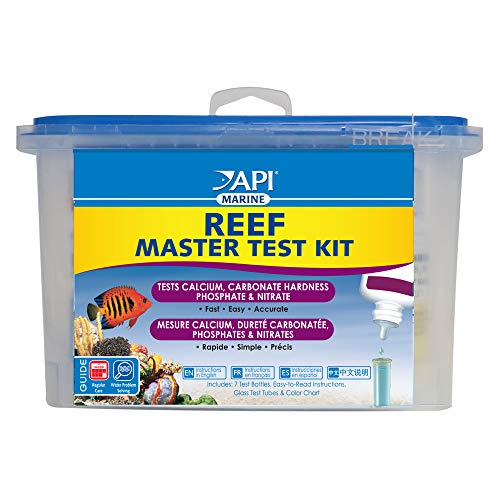
Contains one (1) API REEF MASTER TEST KIT Reef Aquarium Water Test Kit 1-Count, including 7 bottle of testing solution, 2 color cards and 4 test tubes with cap

13.5 gallon glass aquarium for saltwater fish

No Sweat Setup: Our magical (okay, just super-smart) threaded fittings make hooking up your filter and vacuum a breeze. Get up and running in under an hour, no PhD in pool science required!
Choosing the Right Aquarium Size and Location
The ideal aquarium size for most beginners is between 40 to 75 gallons. This range offers a good balance of stability and manageability. A 40-gallon breeder tank provides easier stocking options and tends to be more stable, making it suitable for newcomers. Increasing the volume to 55–75 gallons reduces the likelihood of parameter swings, which helps maintain stable water quality over time. Tanks smaller than 30 gallons tend to be more sensitive to mistakes, leading to more frequent water parameter fluctuations and higher maintenance risks. When choosing your tank size, consider how much space you have available and your ability to perform consistent maintenance. Larger tanks require more equipment and effort but generally offer more stable environments for corals and fish. Starting with a midsize tank is also recommended because it helps build experience without becoming overwhelming for beginners. Additionally, a larger tank can be more forgiving of minor mistakes, making it an ideal learning environment for newcomers. A proper setup from the beginning can significantly enhance your success and enjoyment.

360° FLEXIBLE HEAD: build in a 360-degree rotatable ball joint design, the wave maker can easily adjust any direction of water current to satisfy different angle needs, has helped keep tank clean by reducing dead corners
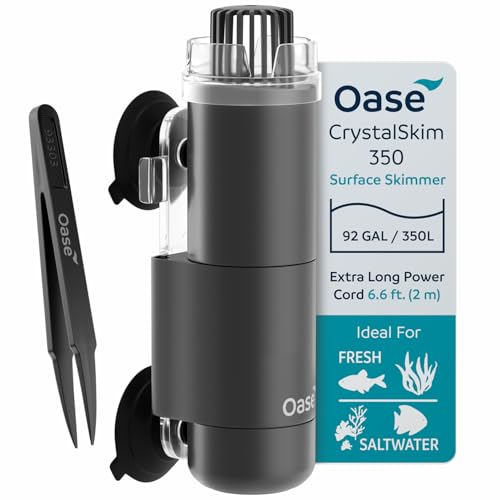
QUICKLY CLEARS SURFACE DEBRIS – Removes biofilm, floating plant matter, and dust from the water’s surface to improve water clarity and support healthy oxygen exchange. Designed for use in both freshwater and marine aquariums.
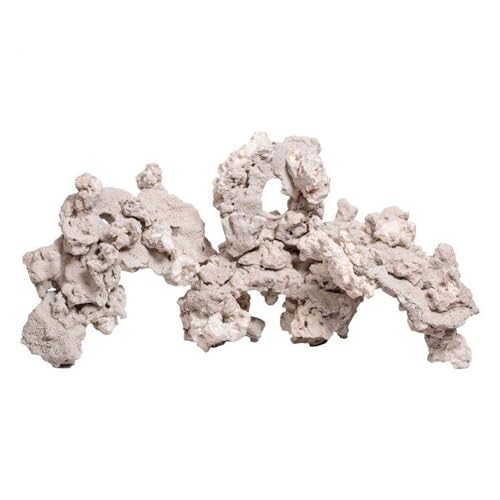
Perfect for Saltwater Aquariums: CaribSea South Sea Base Rock creates a natural, realistic environment for marine life in your saltwater aquarium.
Must-Have Equipment for a Healthy Reef Setup
A healthy reef setup requires a variety of essential equipment to maintain optimal water quality, stability, and organism health. A protein skimmer is crucial for removing dissolved organic waste before it breaks down into harmful compounds. Mechanical filters like sponge filters capture particulate debris, helping to keep the water clear. Biological filtration with live rock transforms ammonia and nitrites into less harmful nitrates, supporting a stable environment. Biological filtration can be accelerated by using a bacterial supplement during cycling to establish beneficial colonies more quickly. Incorporating proper water flow enhances gas exchange and mimics natural ocean currents, which is vital for coral health. Ensuring consistent water parameters is essential for preventing stress and disease among reef inhabitants. Chemical filtration using activated carbon and GFO (granular ferric oxide) reduces impurities and toxins, further improving water clarity and quality. Flow pumps and wavemakers generate consistent water movement, which oxygenates the tank and prevents dead spots where waste can accumulate. Reliable equipment operation can be supported by using monitoring tools, which help track parameters and detect issues early. Heaters and thermostats maintain steady temperatures, generally between 75 and 82 degrees Fahrenheit, essential for sensitive reef inhabitants. Regular maintenance of all equipment prevents malfunctions and ensures continued performance. Algae control tools like algae scrubbers or phosphate removers are also important to prevent nuisance algae growth, which can outcompete corals for nutrients and reduce overall tank health. Proper equipment choices and consistent upkeep form the foundation for a thriving reef ecosystem.

High-Efficiency Aquarium Protein Skimmer – Powerful protein skimmer for aquarium generates dense micro-bubbles to quickly remove organic waste, proteins, and impurities from saltwater, reef, and marine fish tanks, keeping water crystal clear and healthy for your fish and corals.

Motor equipped with needle wheel impeller optimizes skimming

NOT for rimmed tanks. 3 inches diameter skimmer body. Space saving. More practical. Either for Hang-on or in sump use.
Setting Up Your Water, Rockwork, and Lighting
To set up your water, rockwork, and lighting effectively, start by using RO/DI water to ensure contaminants like chlorine, chloramine, and heavy metals are eliminated, which helps maintain stable water chemistry. Aim for a salinity of 1.025 to 1.026 and keep the temperature between 77 and 79°F to promote a healthy environment for your livestock. Before adding any animals, adjust the alkalinity to 8–9 dKH and pH to 8.1–8.4, ensuring parameters are balanced. When preparing your saltwater, dose the salt mix carefully, stirring continuously for at least 24 hours to achieve full dissolution. Proper mixing is crucial to ensure consistent water chemistry and prevent imbalances that could stress your aquatic inhabitants. Additionally, monitoring water parameters regularly will help maintain a stable environment and prevent sudden fluctuations that could harm your marine life.
For rockwork, place your base rocks directly on the tank bottom, leaving enough space around them for easy cleaning and water flow. Add 1.5 to 2 inches of live sand gradually, pouring saltwater slowly to reduce cloudiness and allow the substrate to settle. When selecting lighting, choose LED systems with adjustable spectrum features. Position the lights 6 to 12 inches above the water surface and use a timer. This setup ensures even light coverage, promotes healthy coral growth, and allows you to gradually increase the light intensity to prevent stressing your aquatic life.
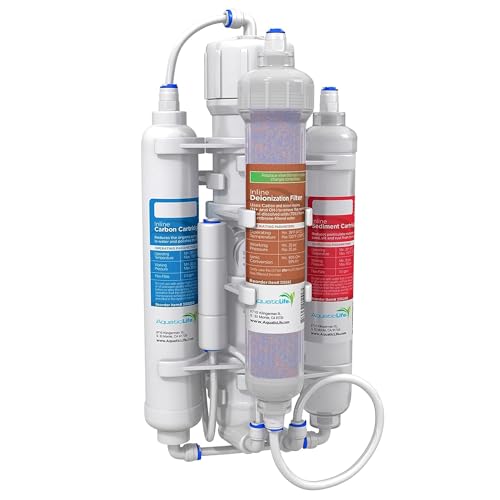
CLEAN, FILTERED WATER FOR AQUARIUMS: The Aquatic Life RO Buddie 4-Stage RO/DI water filter system for aquarium uses reverse osmosis to remove debris from tap water to give you clean water for your fish tanks, humidifiers, fountains, and more.
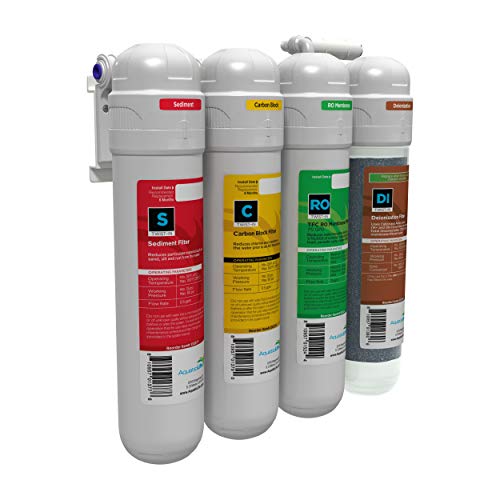
COMPLETE 4-STAGE SYSTEM – The Aquatic Life Twist-In 4-Stage RO/DI water filter combines Sediment, Carbon, RO Membrane, and Color-Changing DI Resin stages to produce up to 75 gallons per day of purified water for aquariums and other applications.

MATERIAL RELIABILITY: MS Reverse Osmosis (RO) membranes are made from 100% food-grade Thin Film Composite (TFC) material for ultimate purification performance with high permeate flow, tested by an independent third-party to meet NSF/ANSI 58 standards.
Cycling Your Tank and Monitoring Water Quality
To guarantee your reef tank is properly cycled and ready for livestock, you need to establish a healthy nitrification process. This involves carefully monitoring ammonia, nitrite, and nitrate levels throughout the cycle. Start by introducing ammonia sources such as pure ammonia or ammonium chloride, which encourage beneficial bacteria growth. You’ll observe an ammonia spike first, then a rise in nitrite levels, followed by nitrate accumulation. These changes indicate the cycle is progressing correctly. Testing your water daily is essential to track these parameters; ideally, ammonia and nitrite levels will reach zero within 6 to 8 weeks. A fully cycled tank shows zero ammonia and nitrite after dosing, with consistent nitrate presence. Maintaining stable water conditions and avoiding livestock during this period helps ensure your biofilter matures completely before adding any reef inhabitants. Regular testing and patience are crucial, as rushing this process can lead to instability and harm your future livestock. Additionally, understanding water quality parameters can help you better interpret your test results and maintain optimal conditions. Knowing the stability of water parameters can also assist in preventing sudden fluctuations that stress your aquatic life.
Introducing Livestock and Achieving Long-Term Stability
Once your tank has completed its cycling process and water parameters are stable, it’s time to carefully introduce your livestock. Start by adding a small cleanup crew, such as reef-safe hermit crabs and snails, to establish biological stability. These creatures help control algae and detritus, creating a healthier environment for future inhabitants. Maintain optimal filtration to efficiently handle waste and support long-term stability. Choose fish and corals that are compatible by researching their specific needs and behavior; avoid overstocking to prevent water quality issues. Introduce new creatures gradually, observing their behavior and the system’s response closely. Regular water testing for ammonia, nitrite, and nitrate levels ensures they remain within safe ranges. Proper acclimation process—adding livestock slowly, turning off excess lighting, and floating the bags before releasing new arrivals—reduces stress and promotes successful integration. A good understanding of the aquarium water chemistry can greatly enhance the stability and aesthetic appeal of your reef tank. Consistent maintenance nurtures a balanced and thriving reef ecosystem. Additionally, understanding the behavior and needs of your live rock and corals can greatly enhance the stability and aesthetic appeal of your reef tank.
Troubleshooting Common Reef Tank Issues
If your reef tank water appears cloudy, the cause is often suspended debris, bacterial blooms, or inadequate mechanical filtration. To troubleshoot, start by inspecting the mechanical filter media and cleaning or replacing it if clogged. Performing regular partial water changes, typically 10-20% weekly, can help remove dissolved organics and improve clarity. Fine filter pads or activated carbon can also capture smaller particles and toxins. Be mindful of overfeeding, overstocking, or decaying organics, as these can sustain bacterial blooms that contribute to persistent haze. Monitoring nutrient levels regularly using testing kits for nitrates and phosphates helps identify the source of excess nutrients fueling bacterial or algal growth. Adjust feeding routines accordingly—reducing quantity and frequency if necessary. If algae outbreaks occur, test for elevated nitrates and phosphates as well, then reduce feeding, increase water changes, or consider phosphate removers to cut nutrient levels. Ensuring strong water flow in the tank prevents particles from settling and encourages debris removal, which is essential for maintaining proper filtration. Manual removal of visible algae and debris can also limit regrowth, especially in problem areas. Consistently maintaining stable parameters such as temperature, salinity, pH, and alkalinity is essential to prevent conditions that promote cloudiness. Maintaining proper circulation helps keep particles suspended and improves overall water quality. Regular maintenance, prompt response to equipment issues, and vigilant monitoring help keep water clear and support a healthy reef environment.

2 Layers for Crystal Clear Water – Dual-density pad traps both large debris and fine particles, polishing your aquarium water to professional-grade clarity.
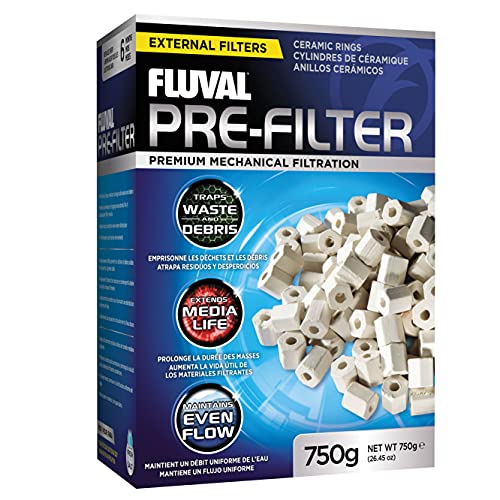
Mechanical filter media prevents finer filter media from clogging
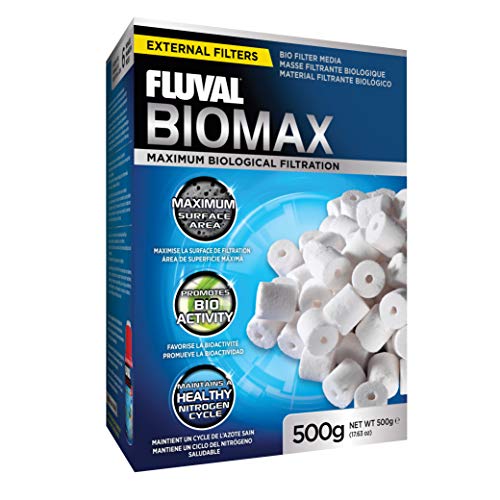
Filter Compatibility: Compatible with Fluval Filter Series 106, 206, 306, 406, FX5, FX6, 105, 205, 305, 405, 104, 204, 304, and 404.